Behind The Scenes: She Works | Branded Documentary
Hi, I’m Jonathan Lue from Honeybee Films. In this post, I’ll walk you through our process for creating a branded documentary. You’ll learn how we cast talent, find the story, build a storyboard and shot list, prepare and work with non-fiction talent, and operate a production with a minimal crew.
My hope is that this gives you something useful as you think about your own projects. If it resonates, we’d love to connect and be considered for your next branded documentary.
If you want a deeper look, check out our Milanote board where we break down the full process for this project.
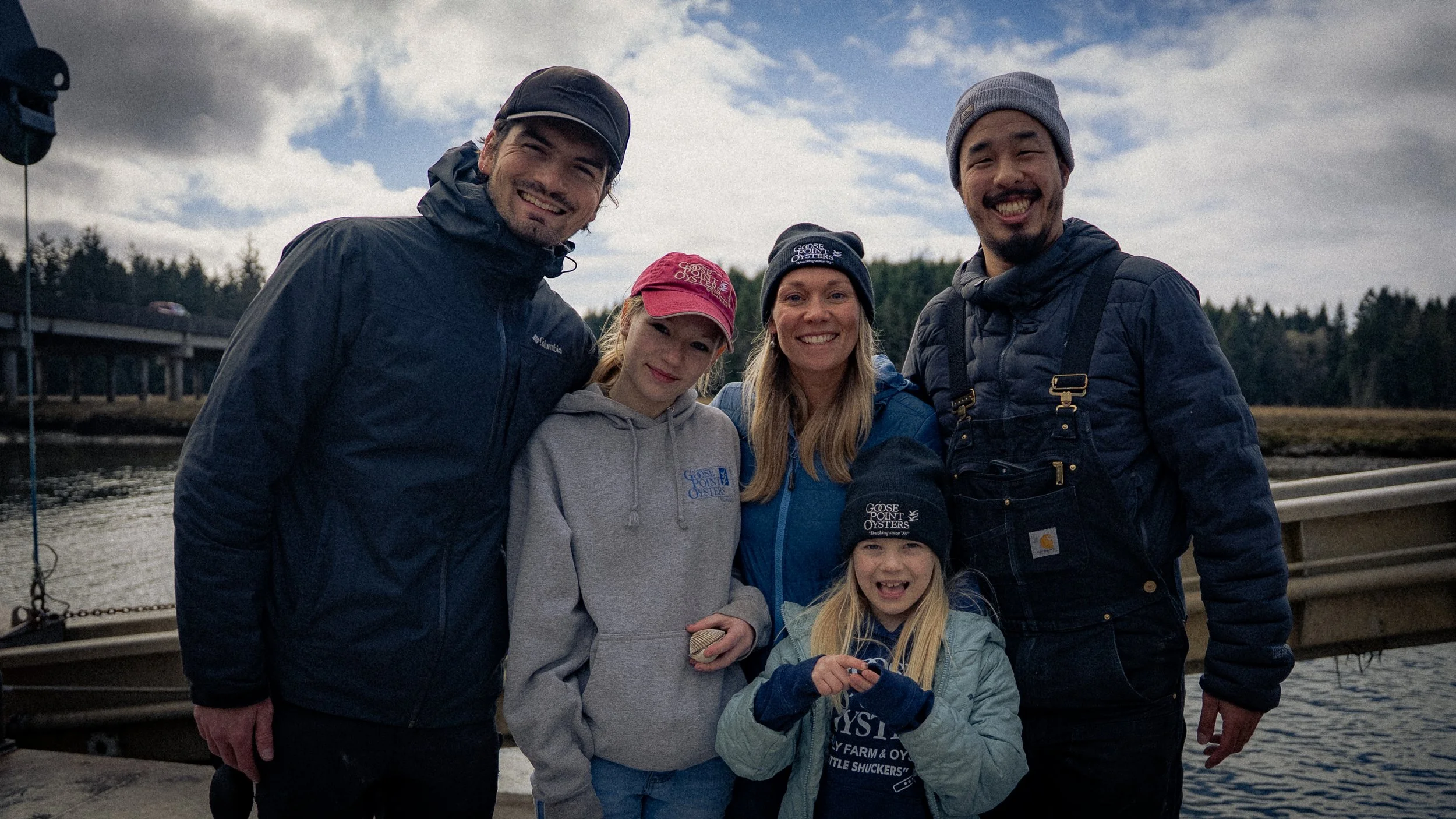
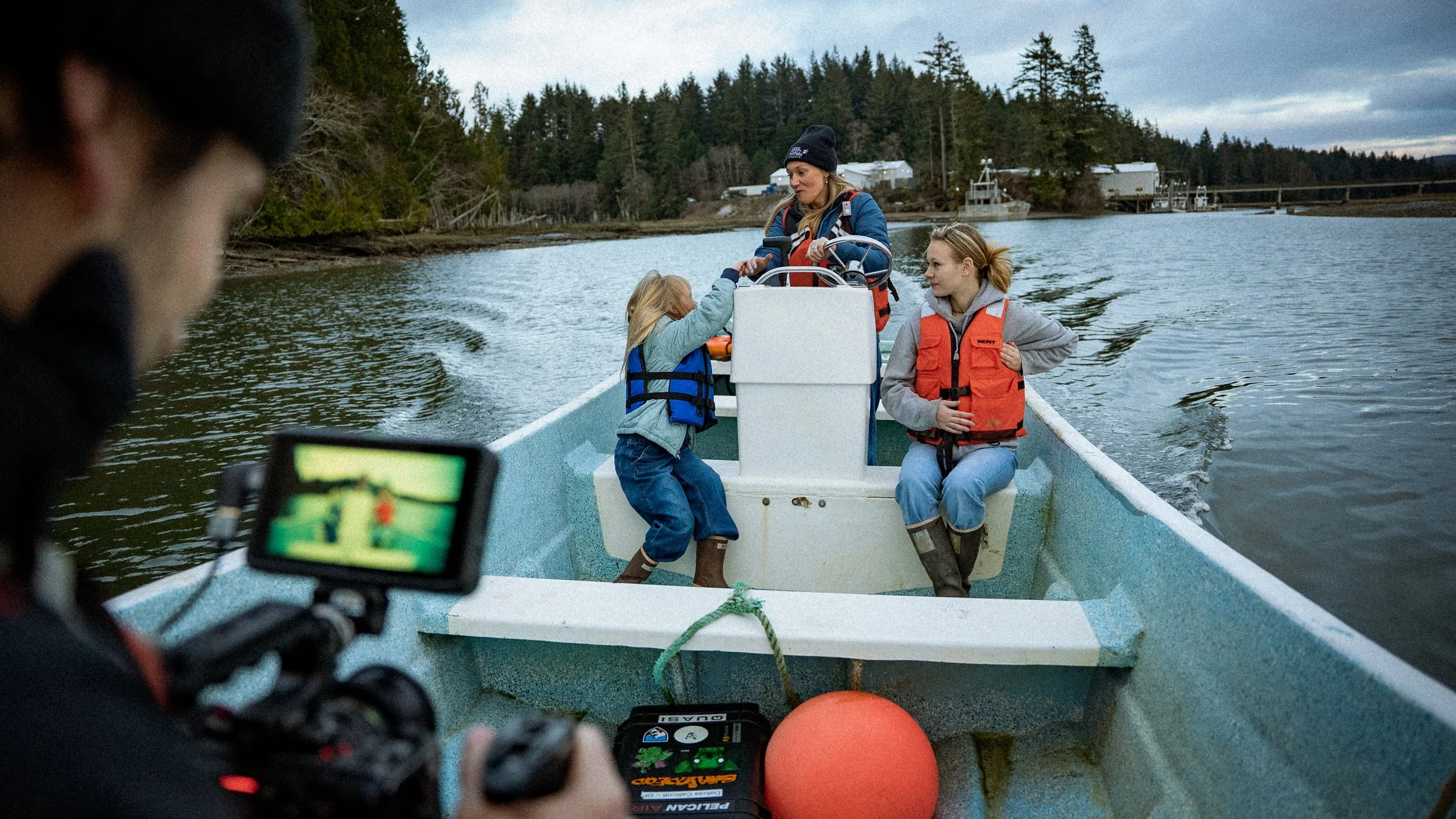
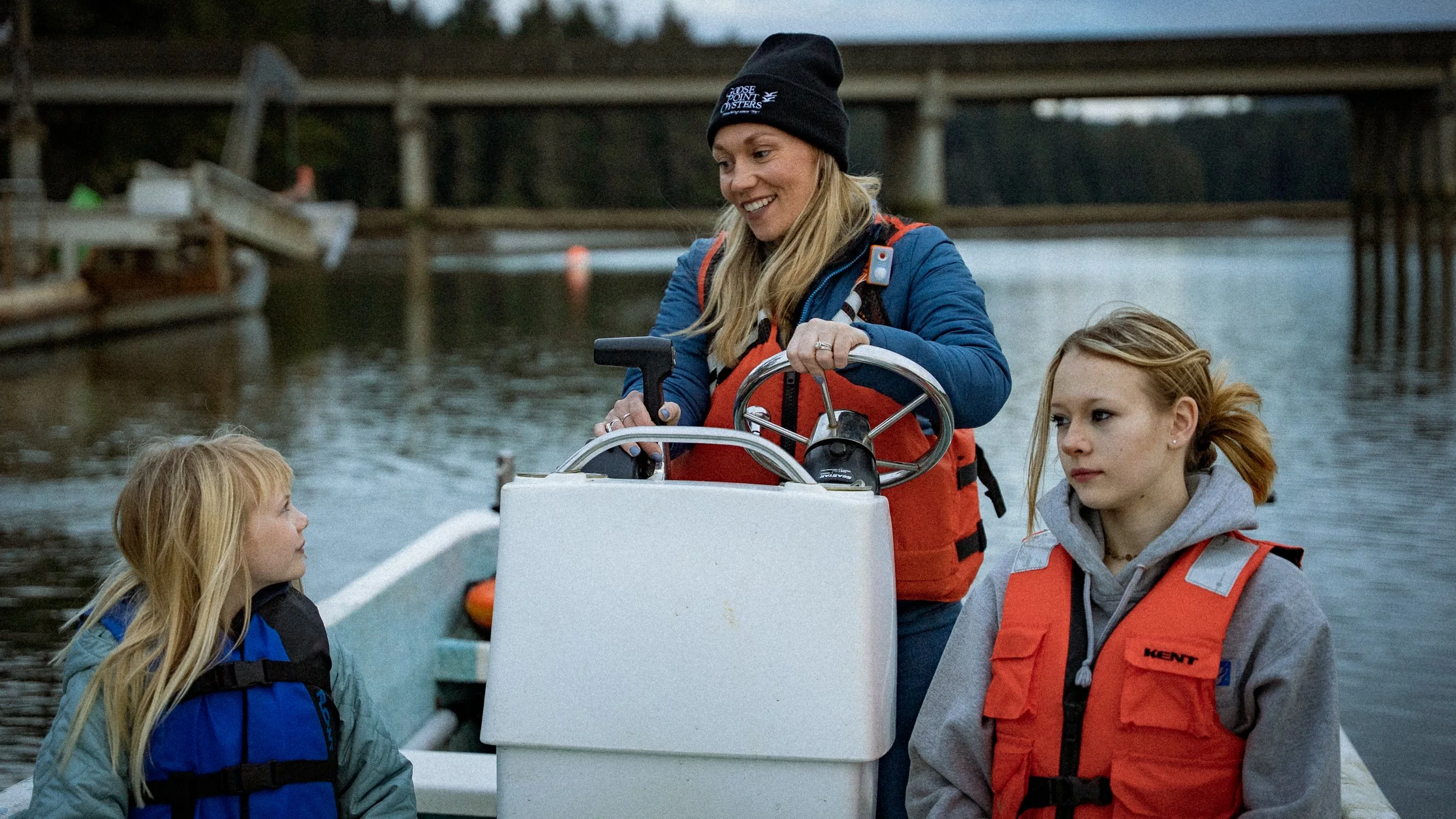
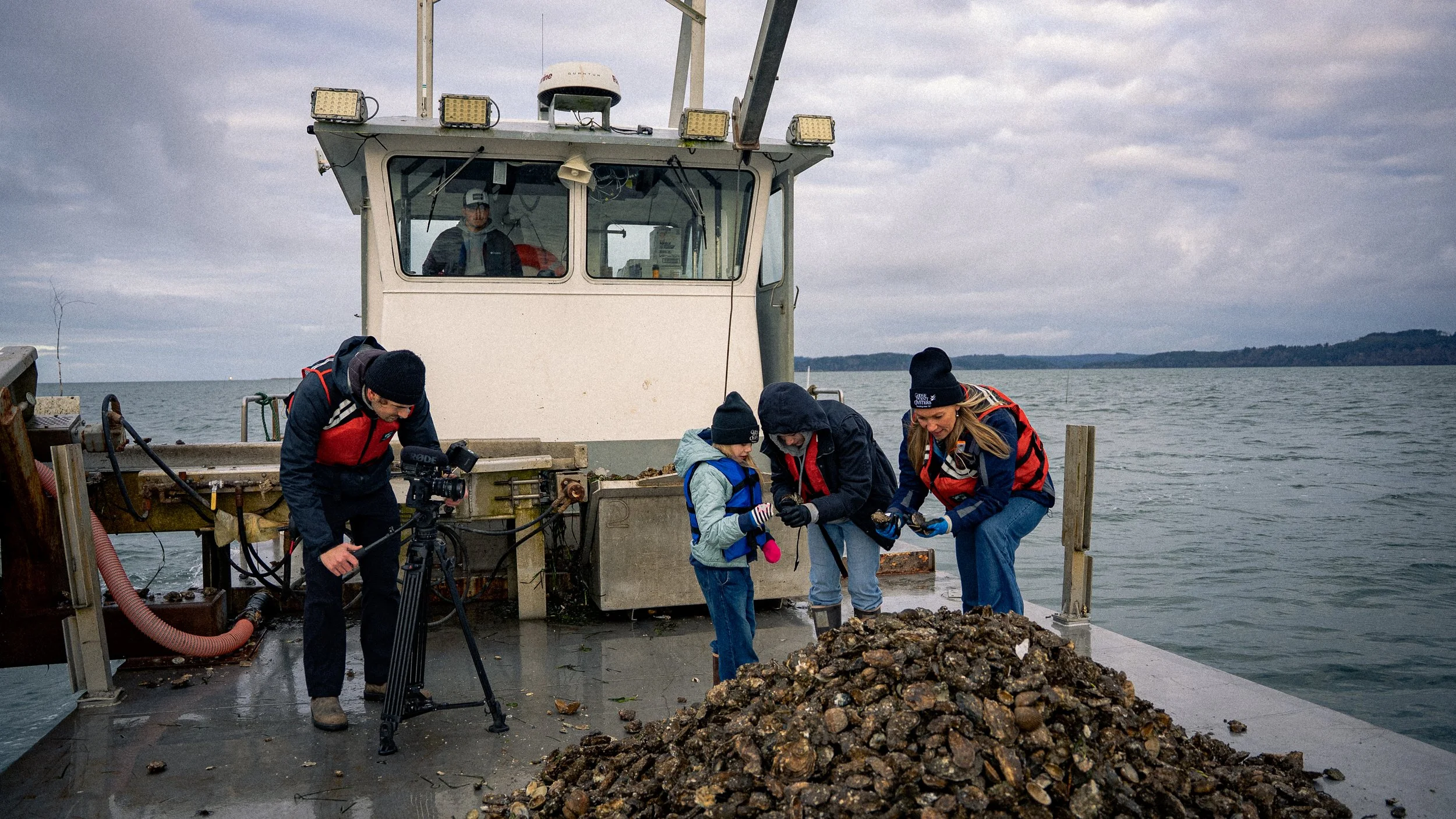
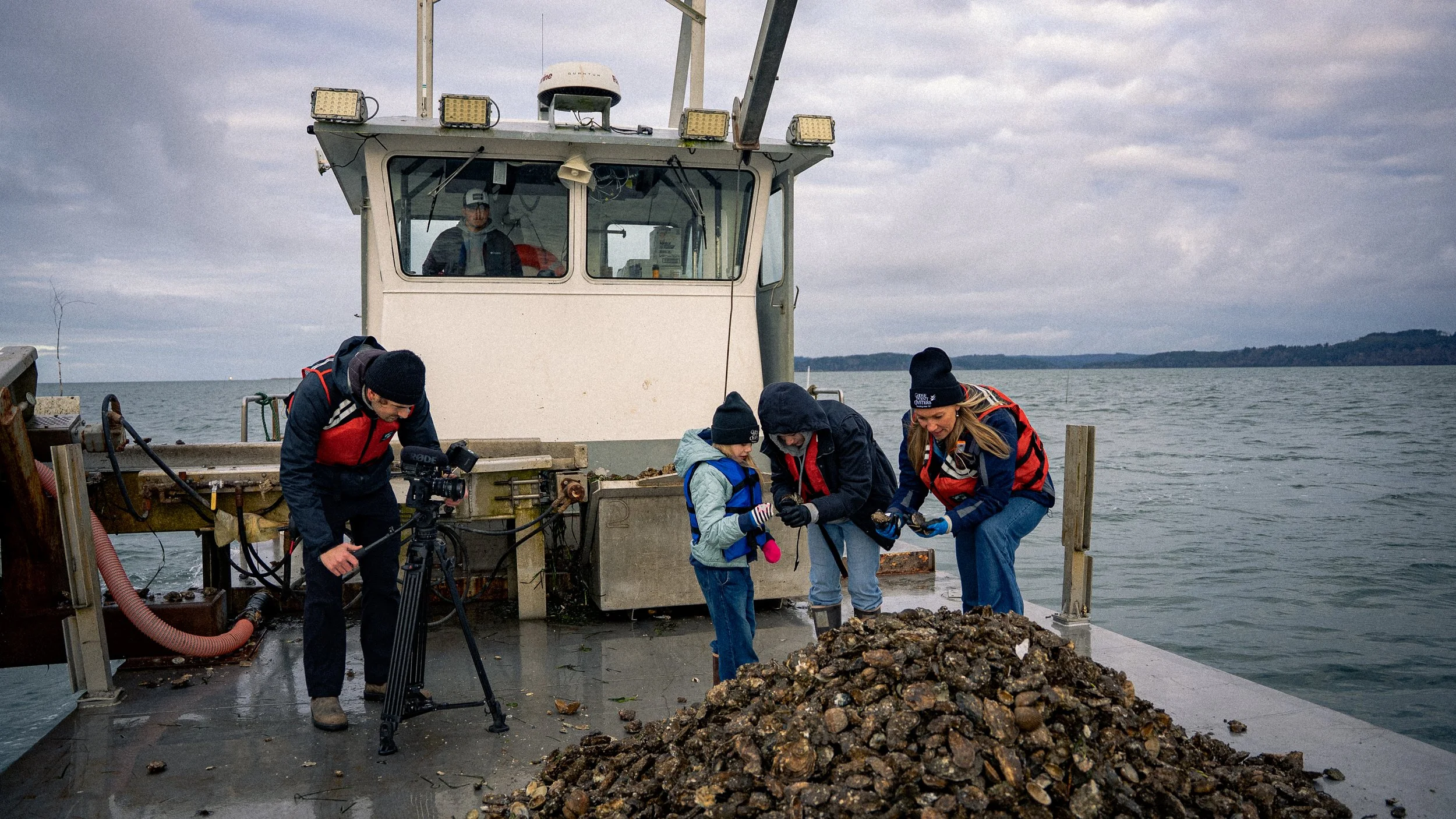
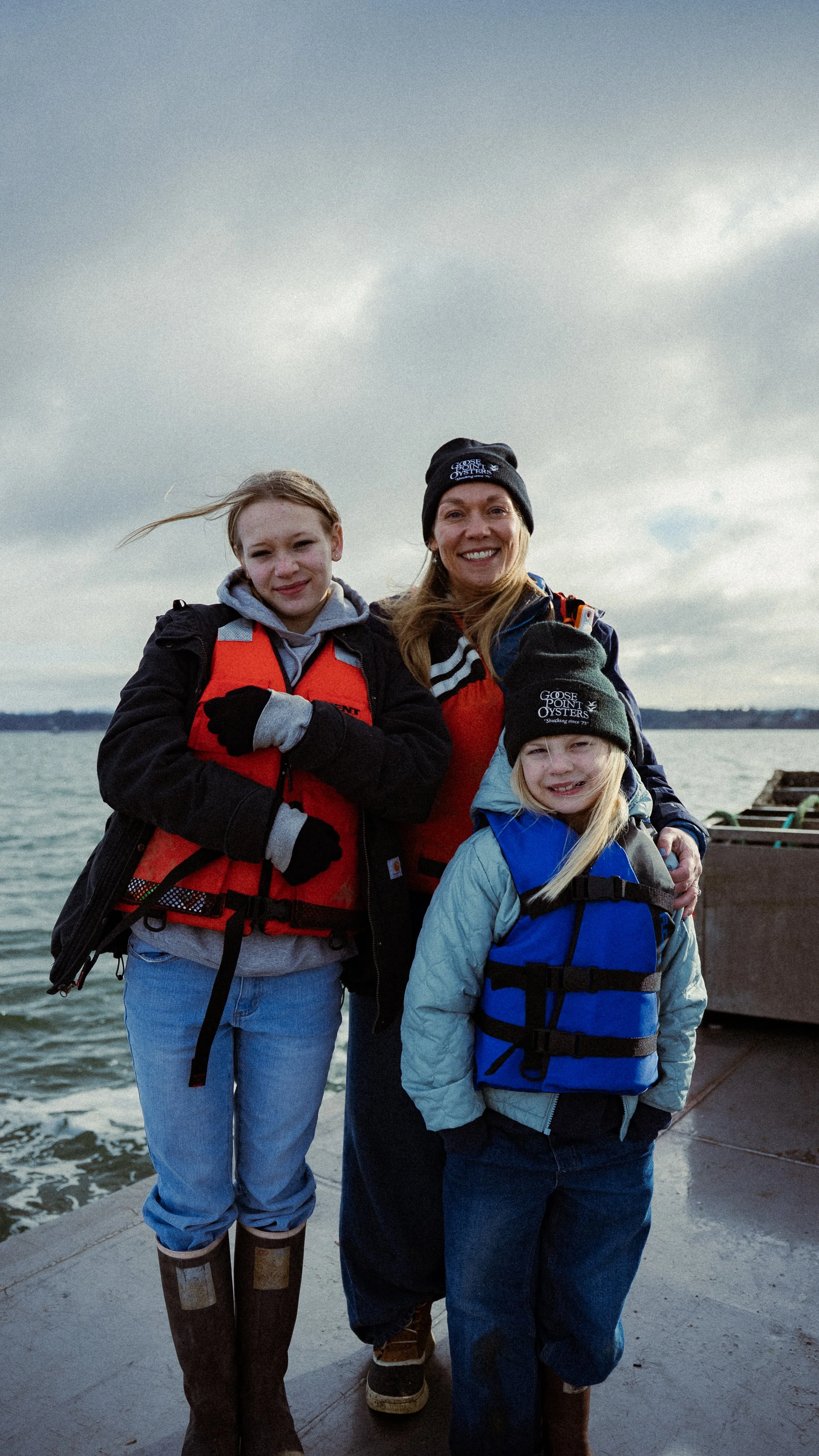
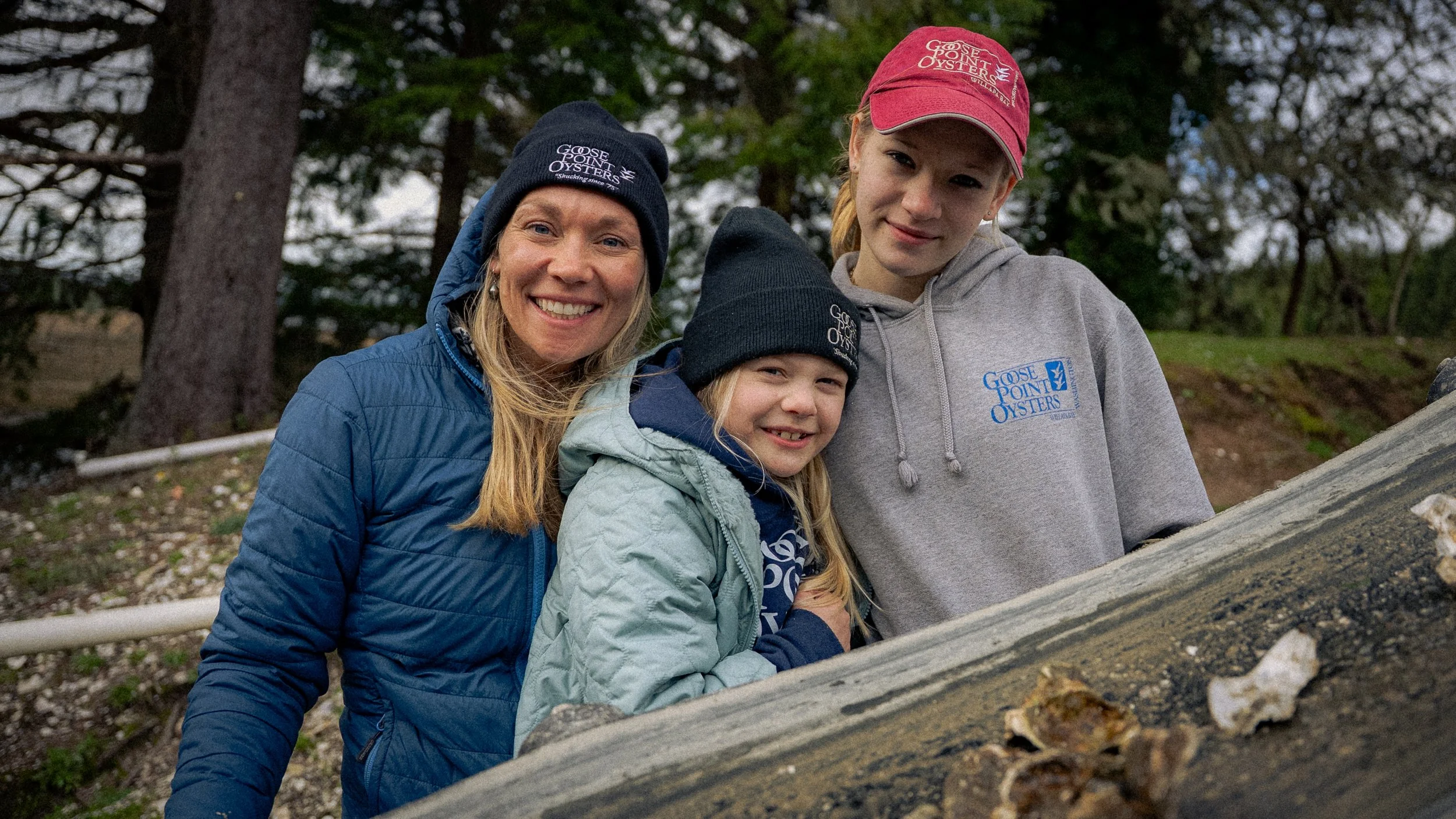
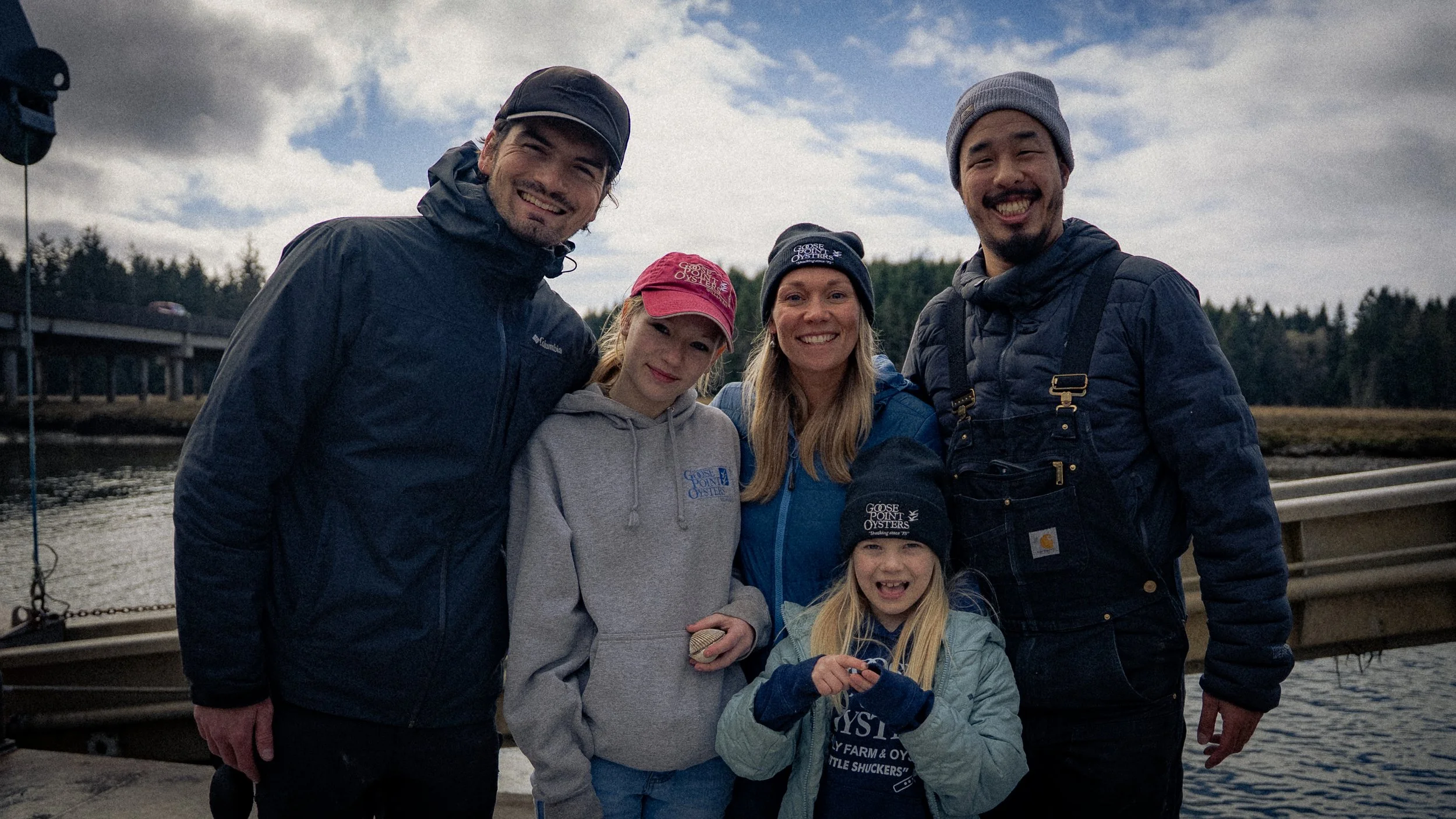
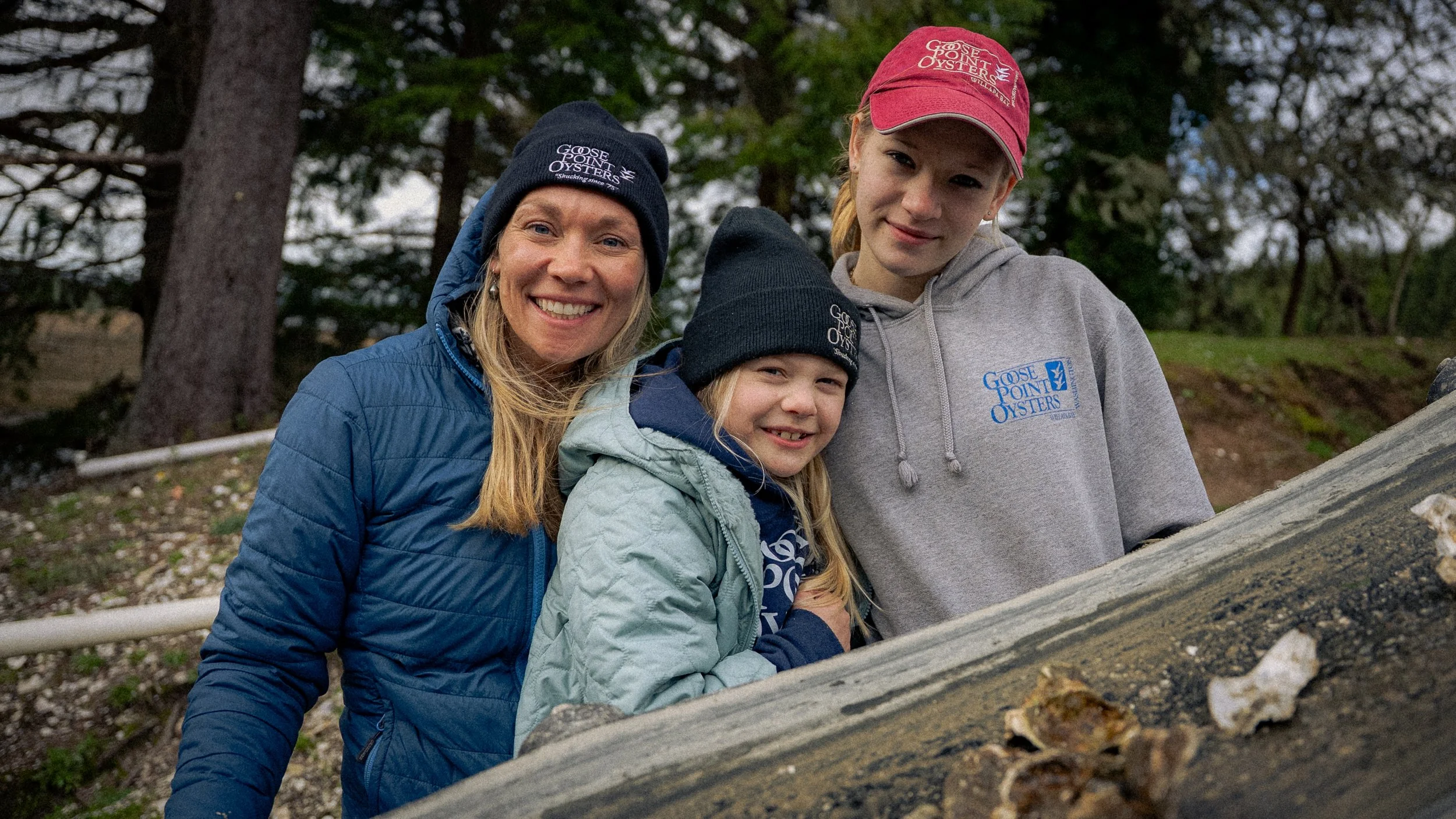
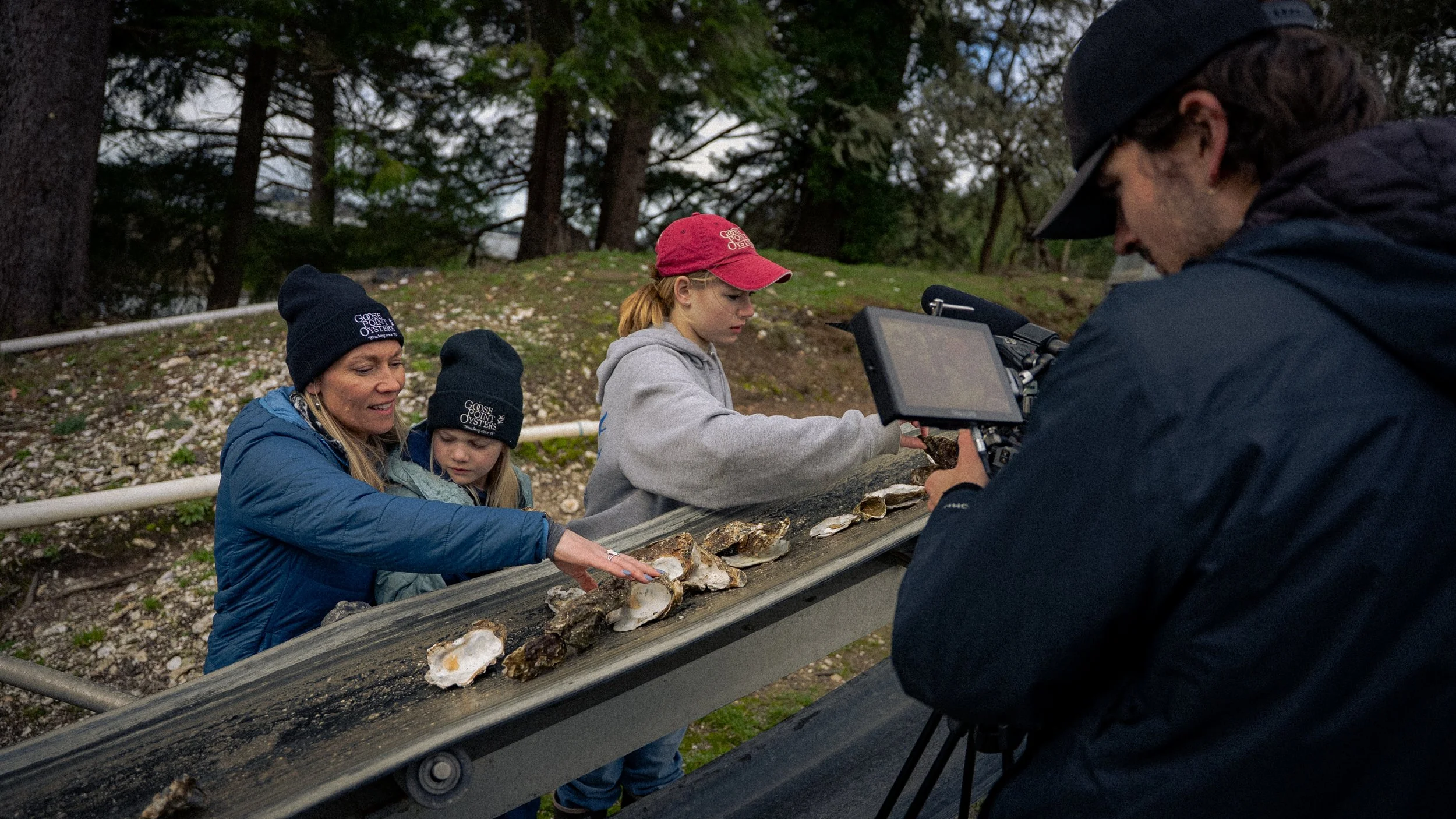
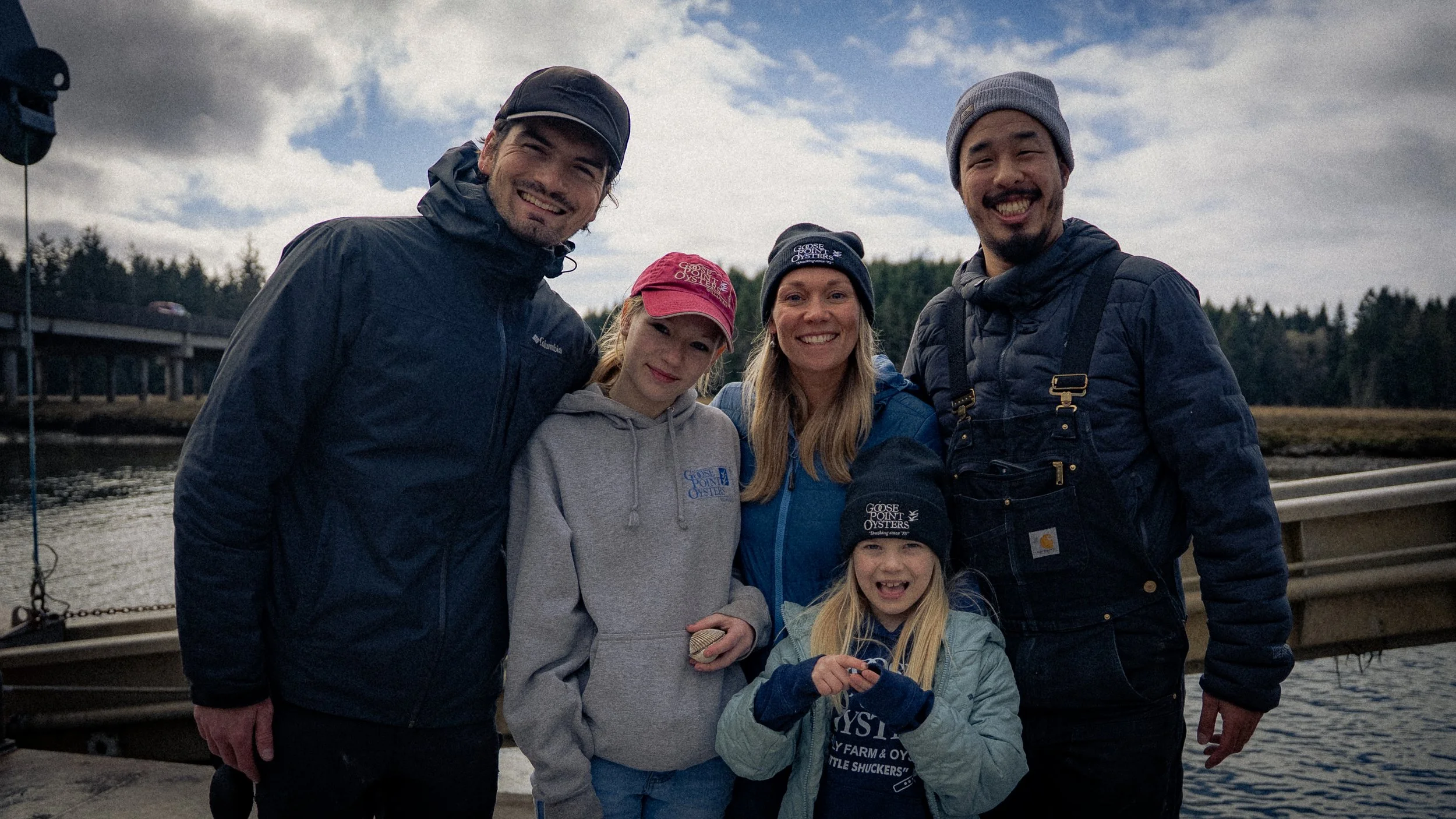
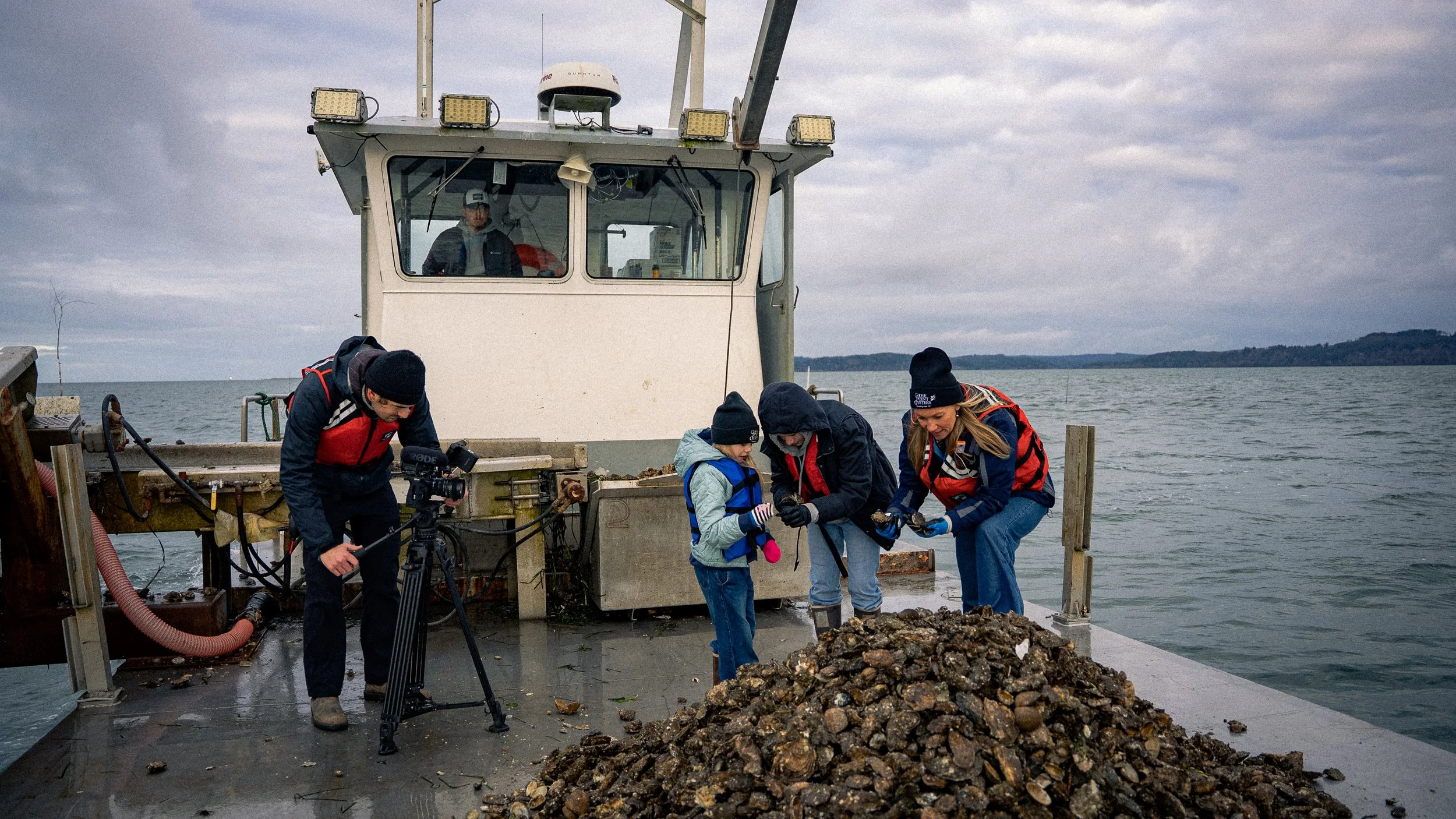
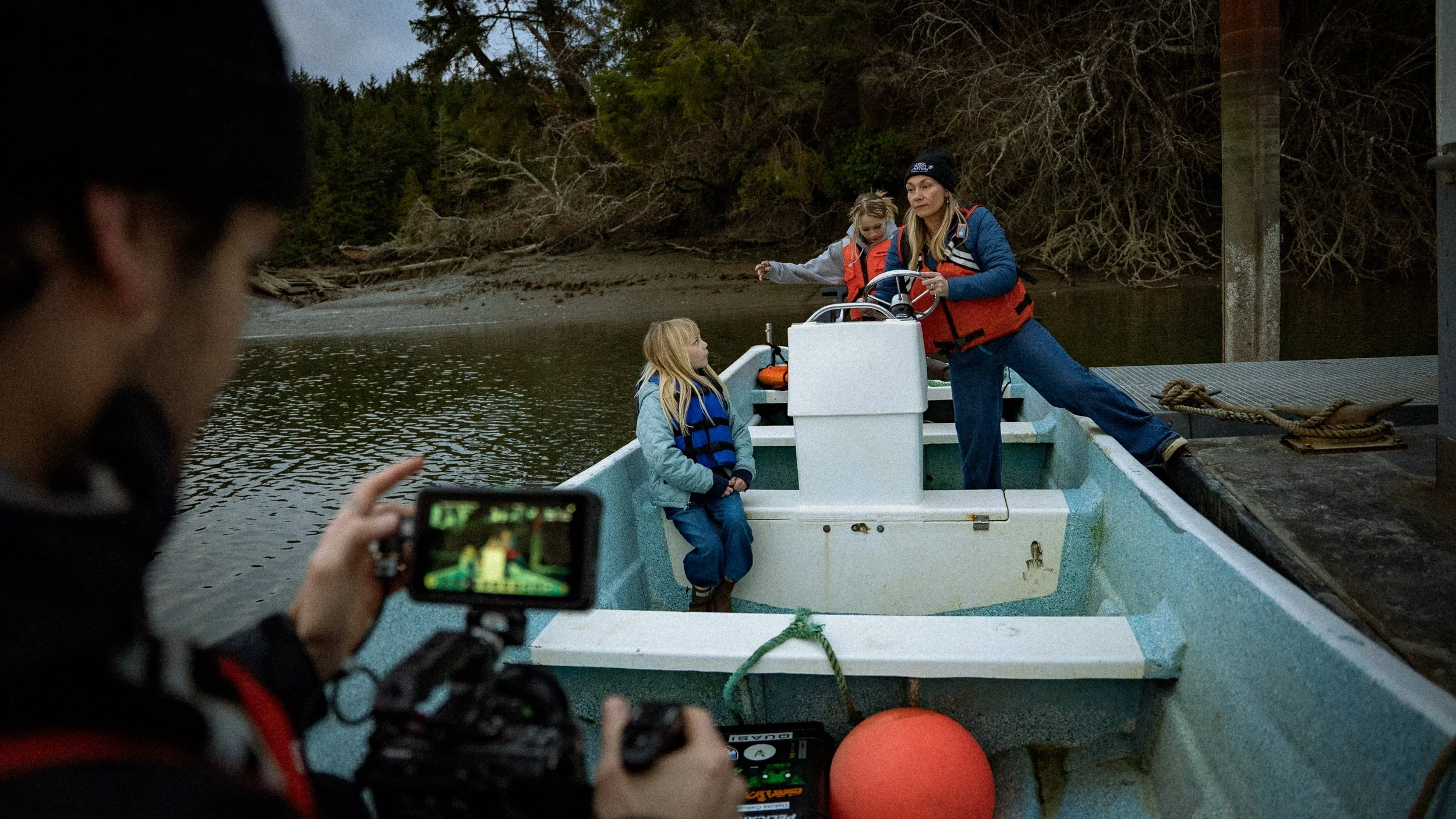
Production team with Kathleen & her two kids
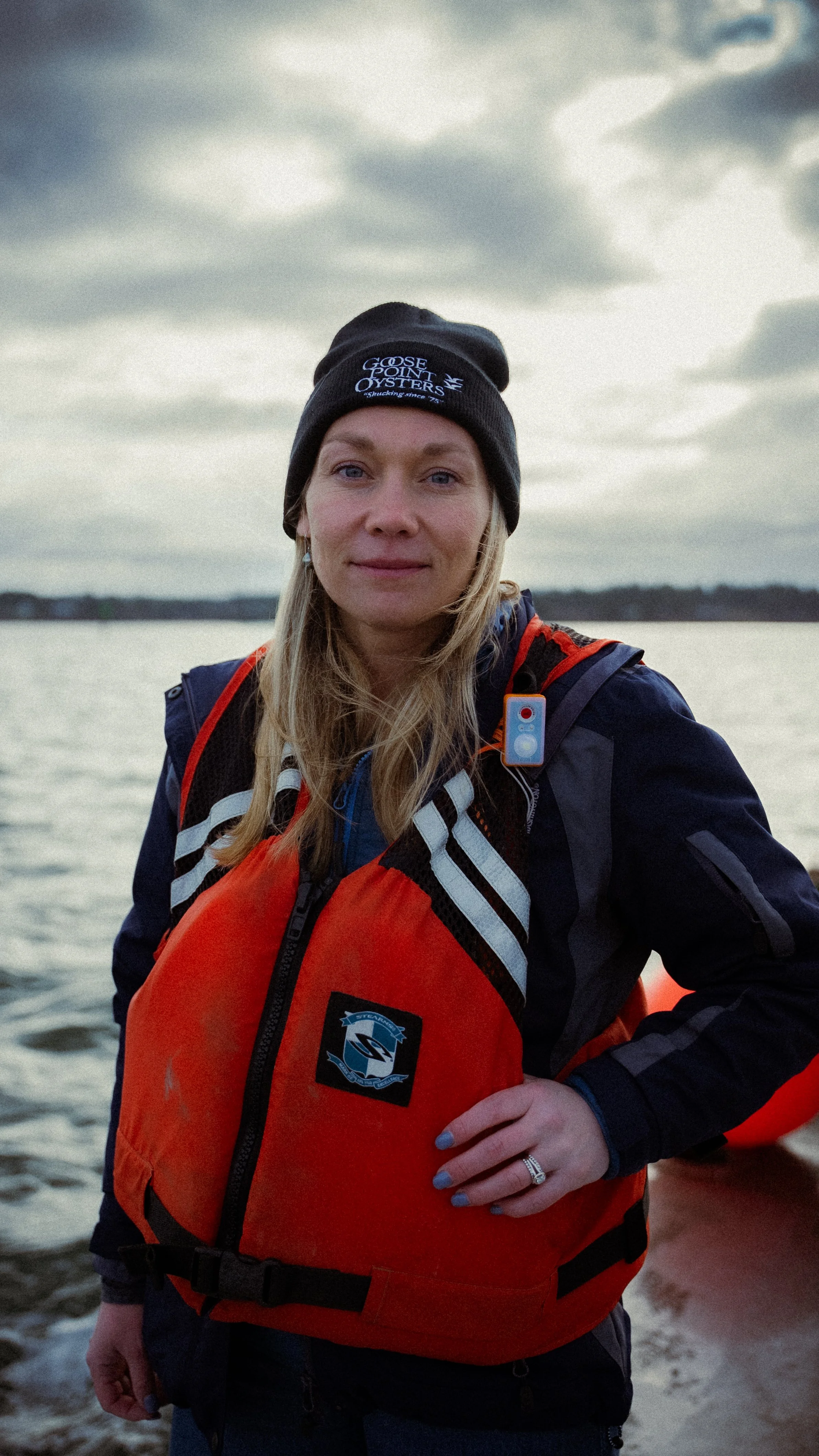
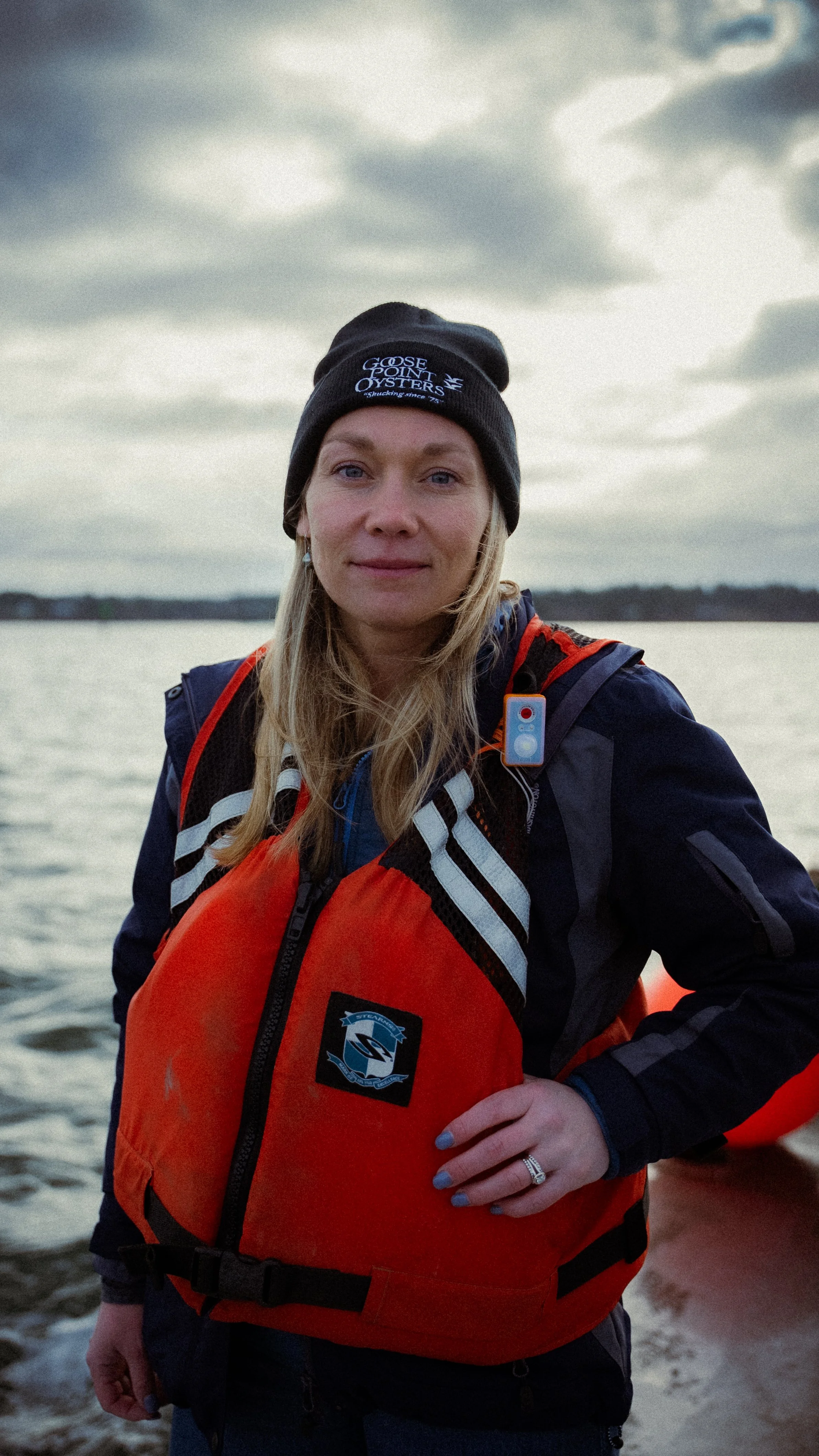
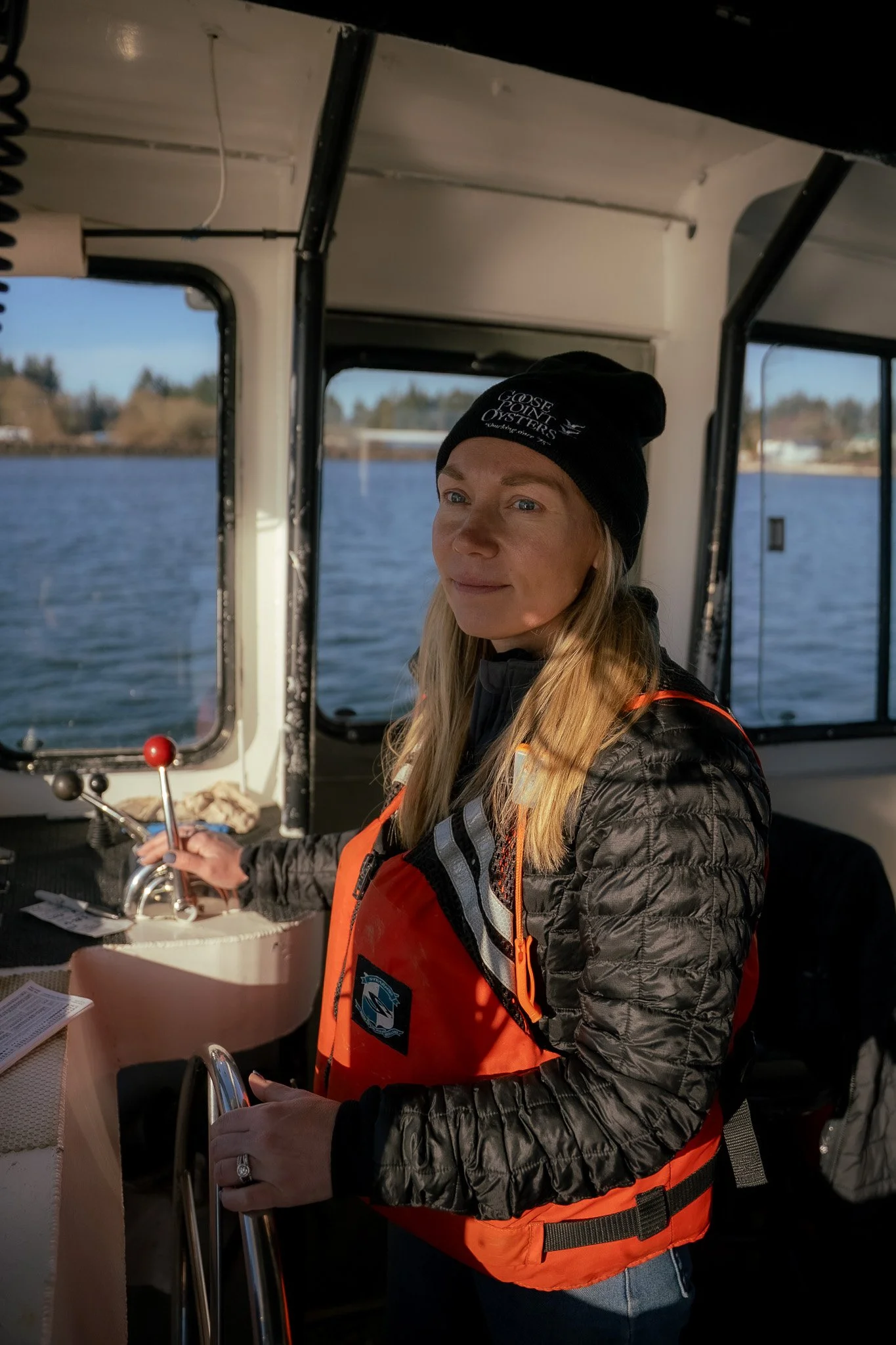
Honeybee Films partnered with Kathleen Nisbet Moncy of Goose Point Oysters to create a :60 commercial for International Women’s Day. The goal was to highlight a woman in business working in a male-dominated industry. Kathleen is a second-generation oyster farmer who took over her father’s farm. Today, they employ over 80 full-time workers across a 1,900-acre operation in Willapa Bay, Washington.
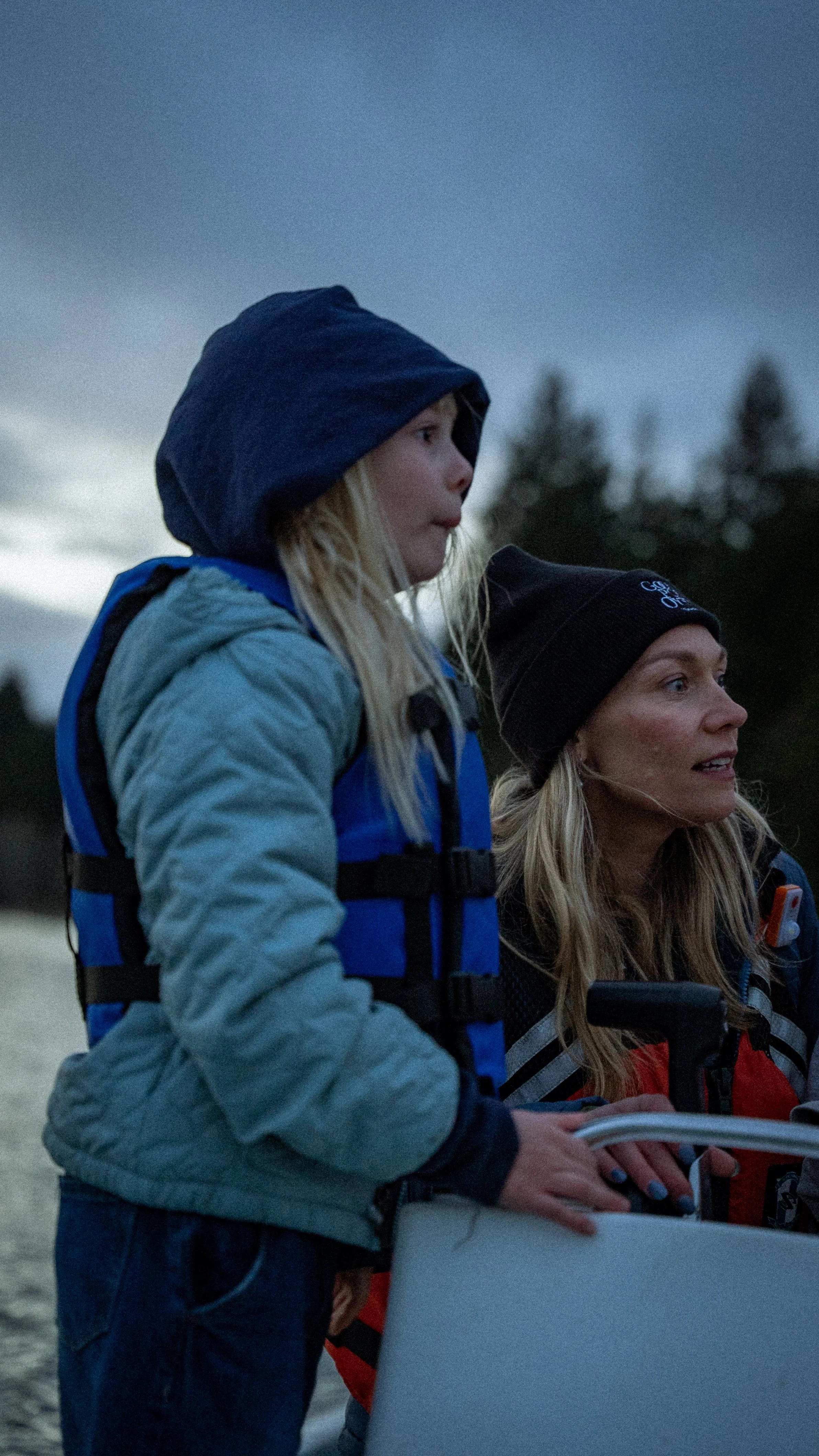
The creative direction focused on showing young girls what is possible. We wanted to portray Kathleen as a hardworking, blue-collar leader while incorporating her daughters into the story. The concept centered on seeing the oyster operation through a child’s perspective as their mother runs the business.
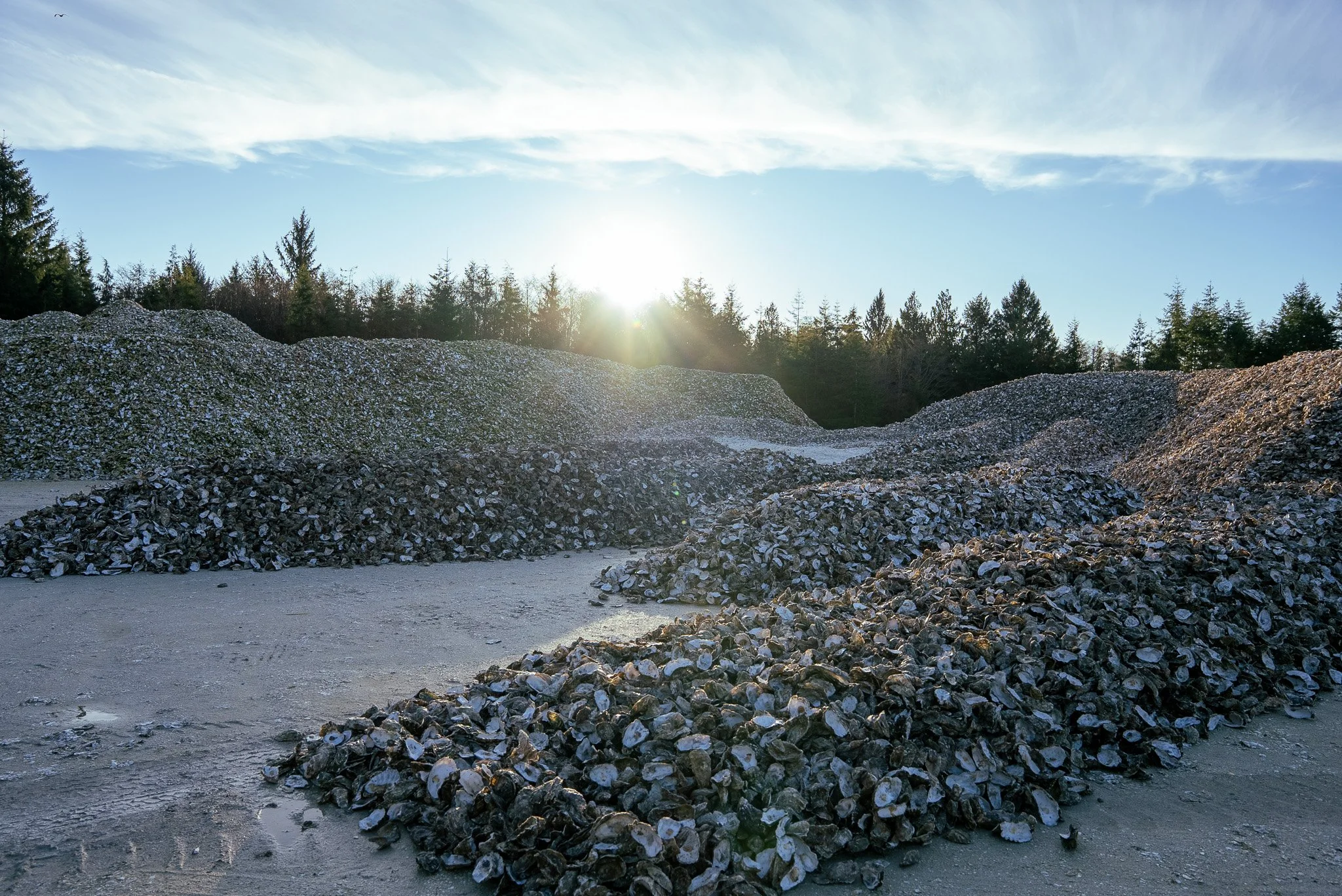
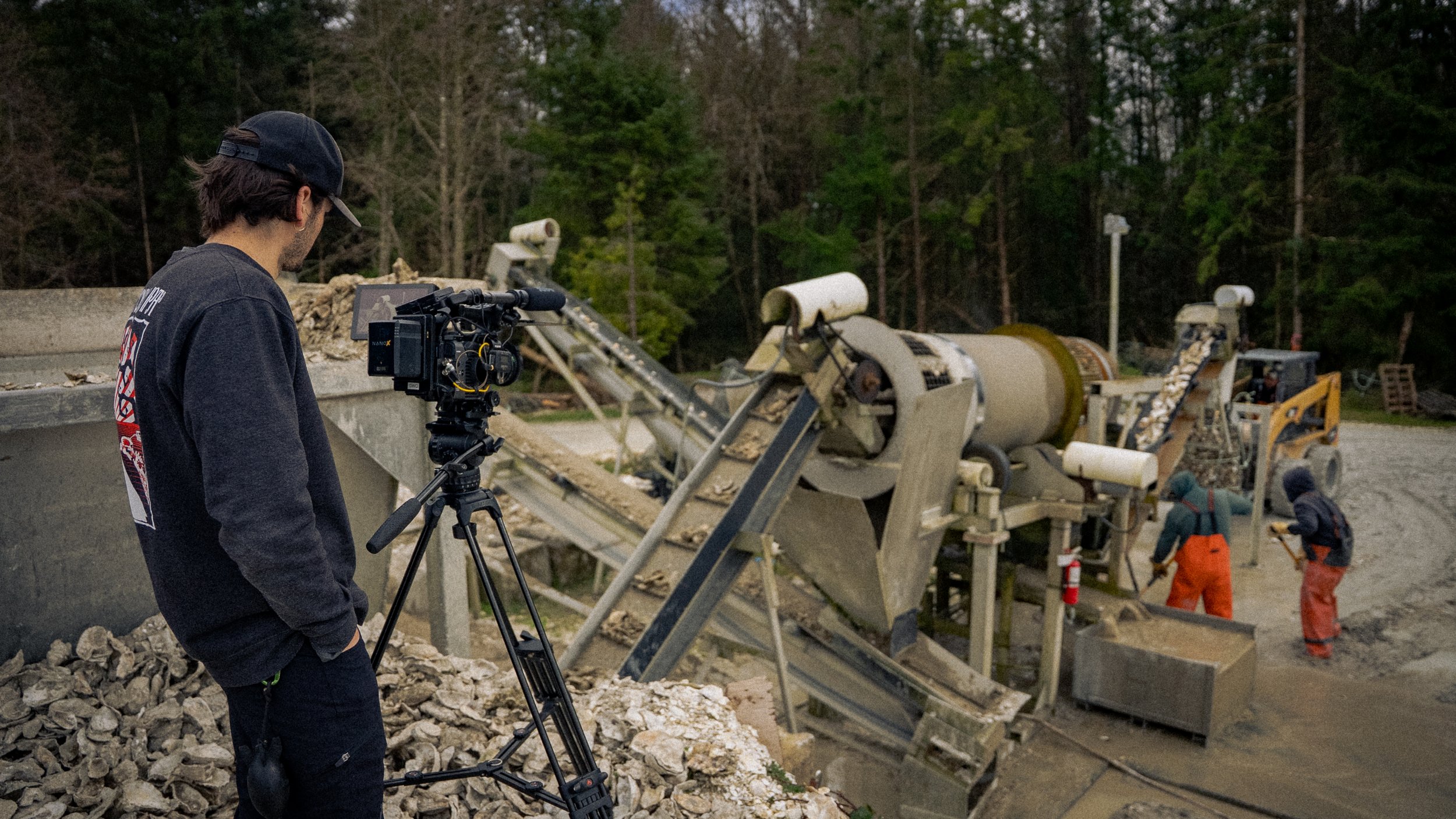
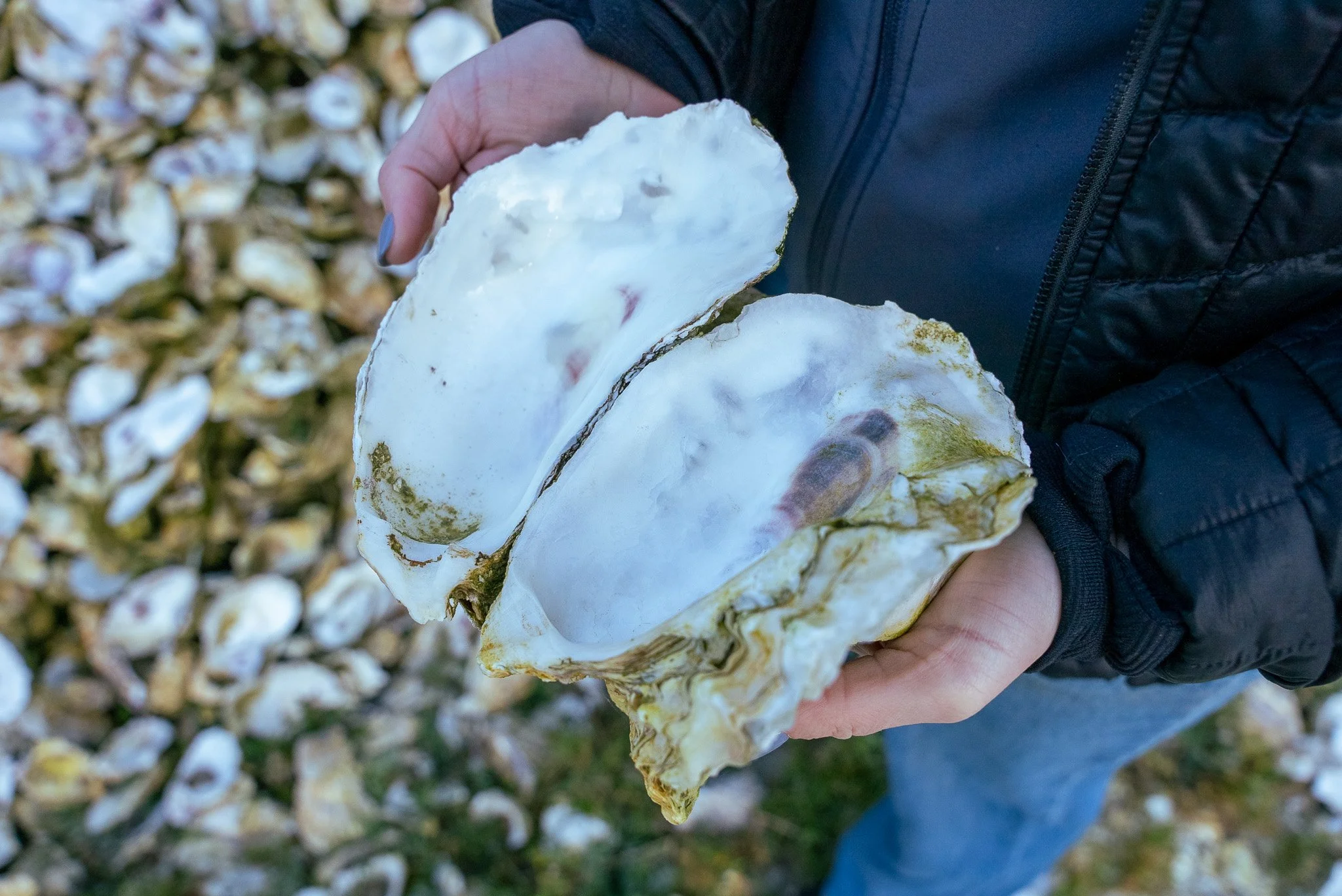
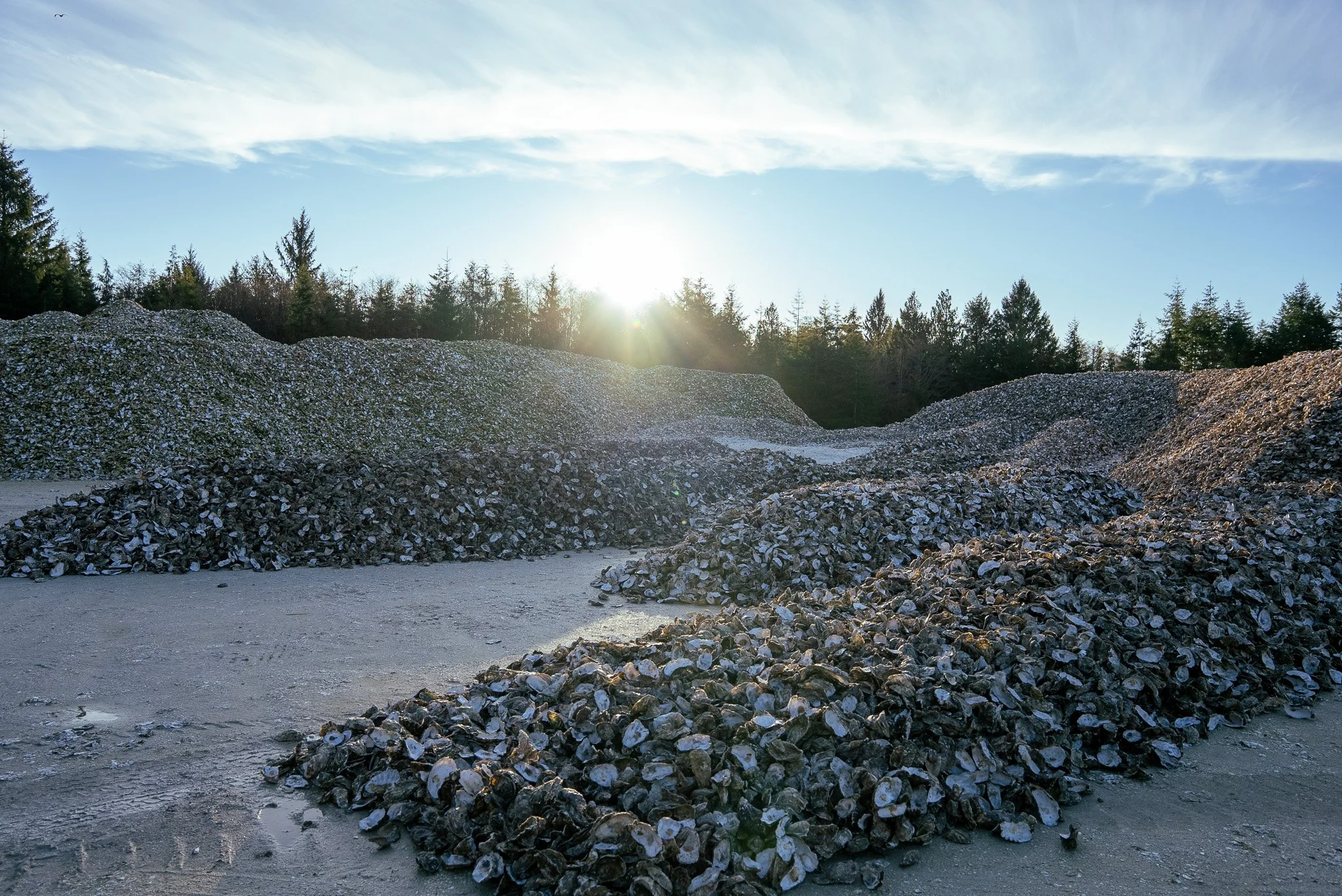
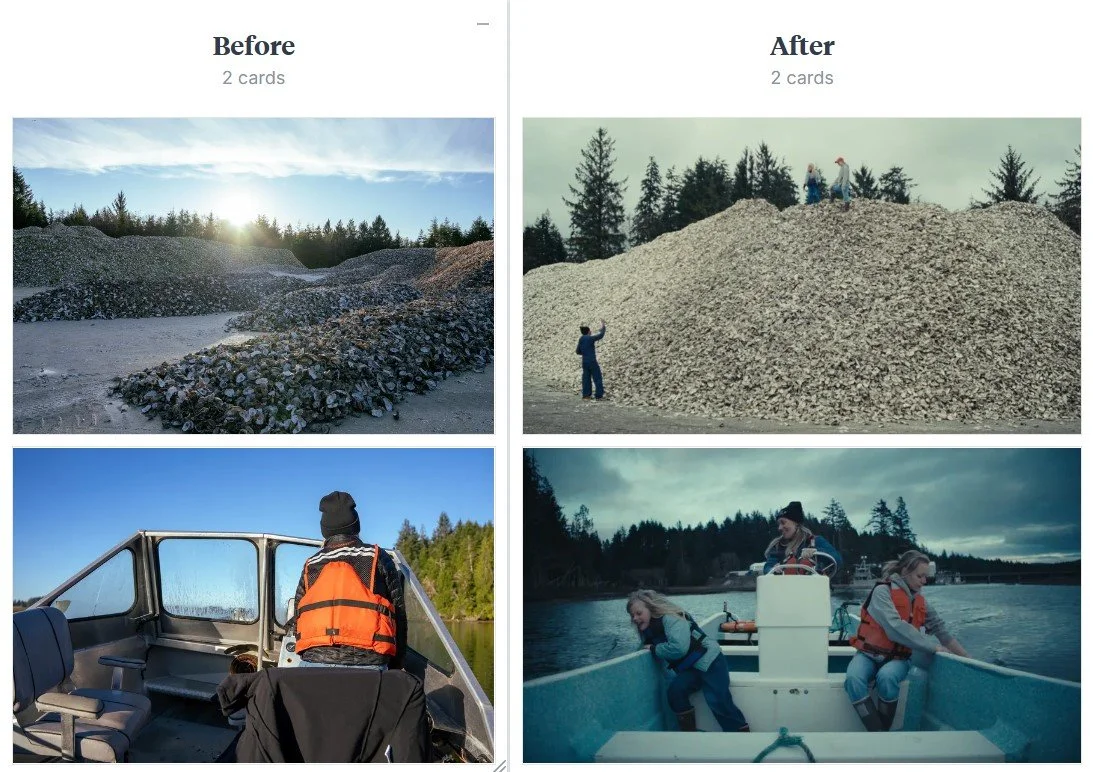
A shot of the oyster shell pile during my initial visit
Cast Talent
When casting for this project, we were not just looking for someone visually compelling. We were looking for someone with a story that mattered.
There is a level of maturity in filmmaking that comes from putting aside the need to create something flashy or trendy. Story always comes first. A strong story will outlast any visual trend.
This process began with an email, followed by a call, and then an in-person visit. I traveled to Goose Point Oysters to meet Kathleen for the first time. She walked me through the entire operation. I went in knowing very little and left with a deep understanding of her world.
That four-hour visit shaped everything. It gave me clarity on the story and direction. I also gathered a large number of photos that became essential during pre-production.
My Director of Photography, Dakota Callicott, was not able to attend that initial visit. Because of that, I documented as much as possible. Every detail mattered. Those references later informed how we approached the shoot visually.
I’ve found that capturing your own reference material is far more valuable than relying solely on platforms like Frameset, Vimeo, or Instagram. When your subject is local, take the time to gather what you need firsthand.
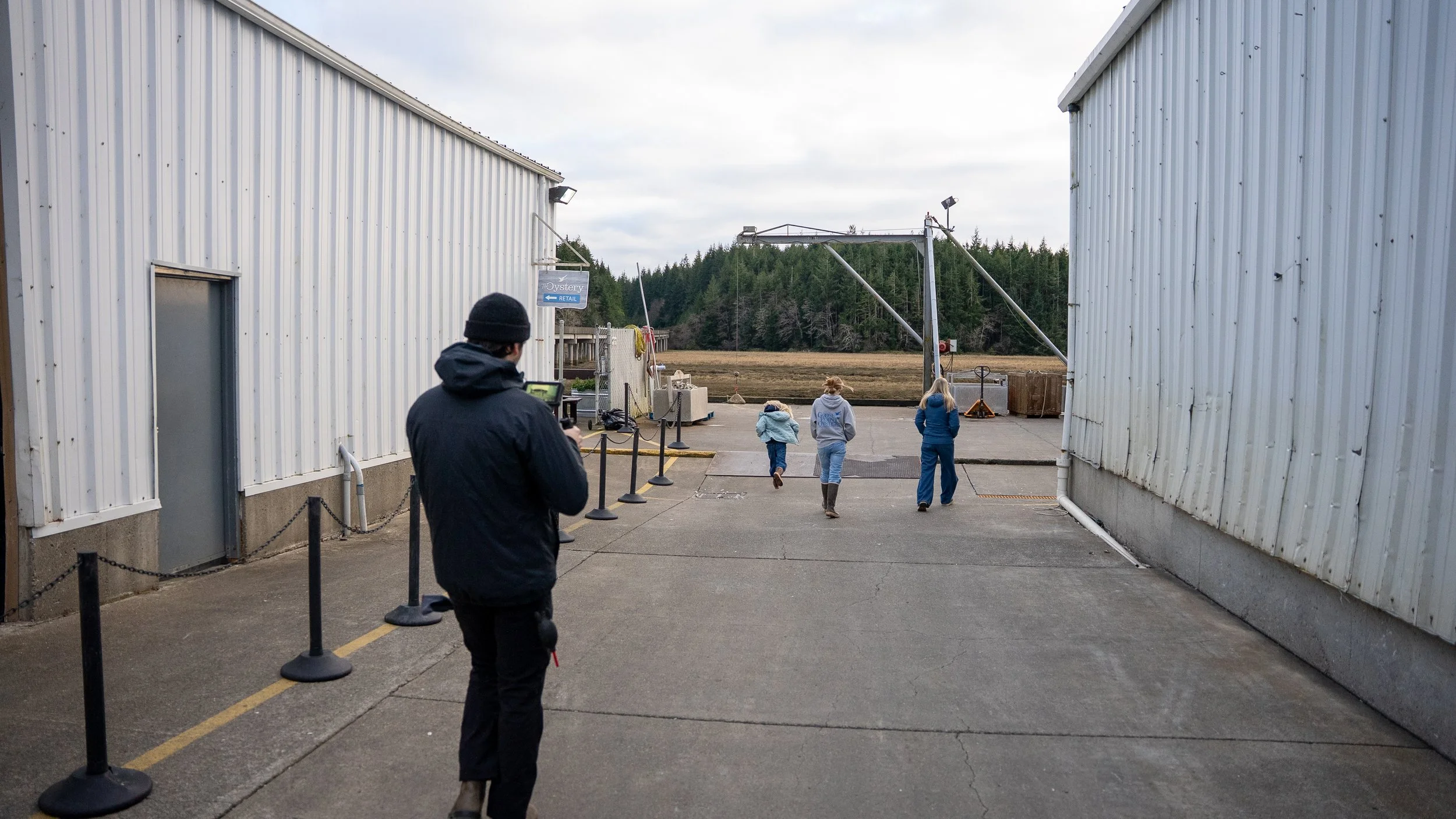
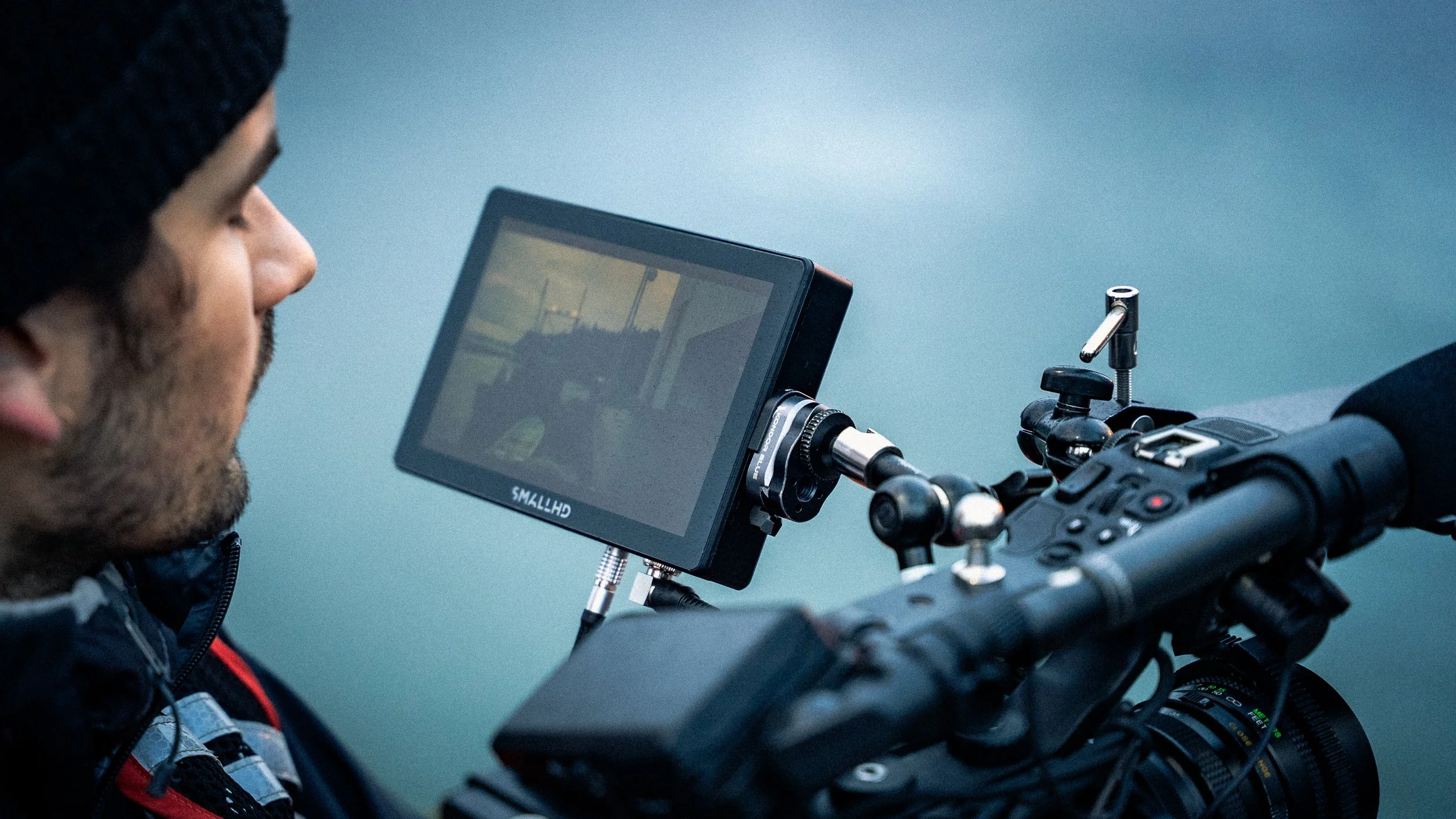
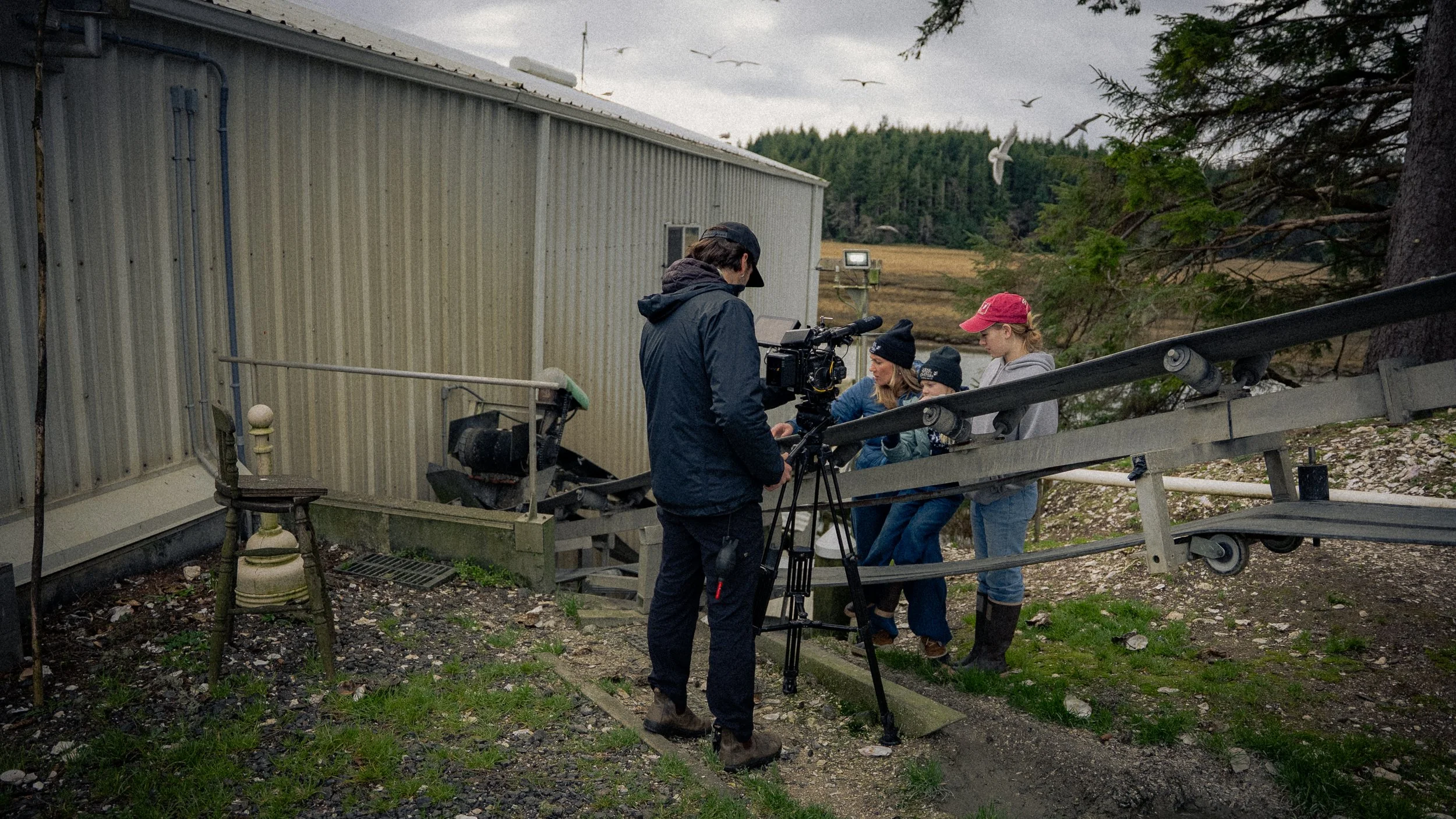
Dakota (DP) with Nisbet Family
Finding the Story
Through conversations with Kathleen, we discovered a deeper issue. Small oyster farms are closing due to rising costs and government regulations. These farms are often the backbone of rural communities. When they shut down, jobs disappear and local economies suffer.
That context gave weight to Kathleen’s story. This was not just about one farmer. It was about resilience, responsibility, and the future of a community.
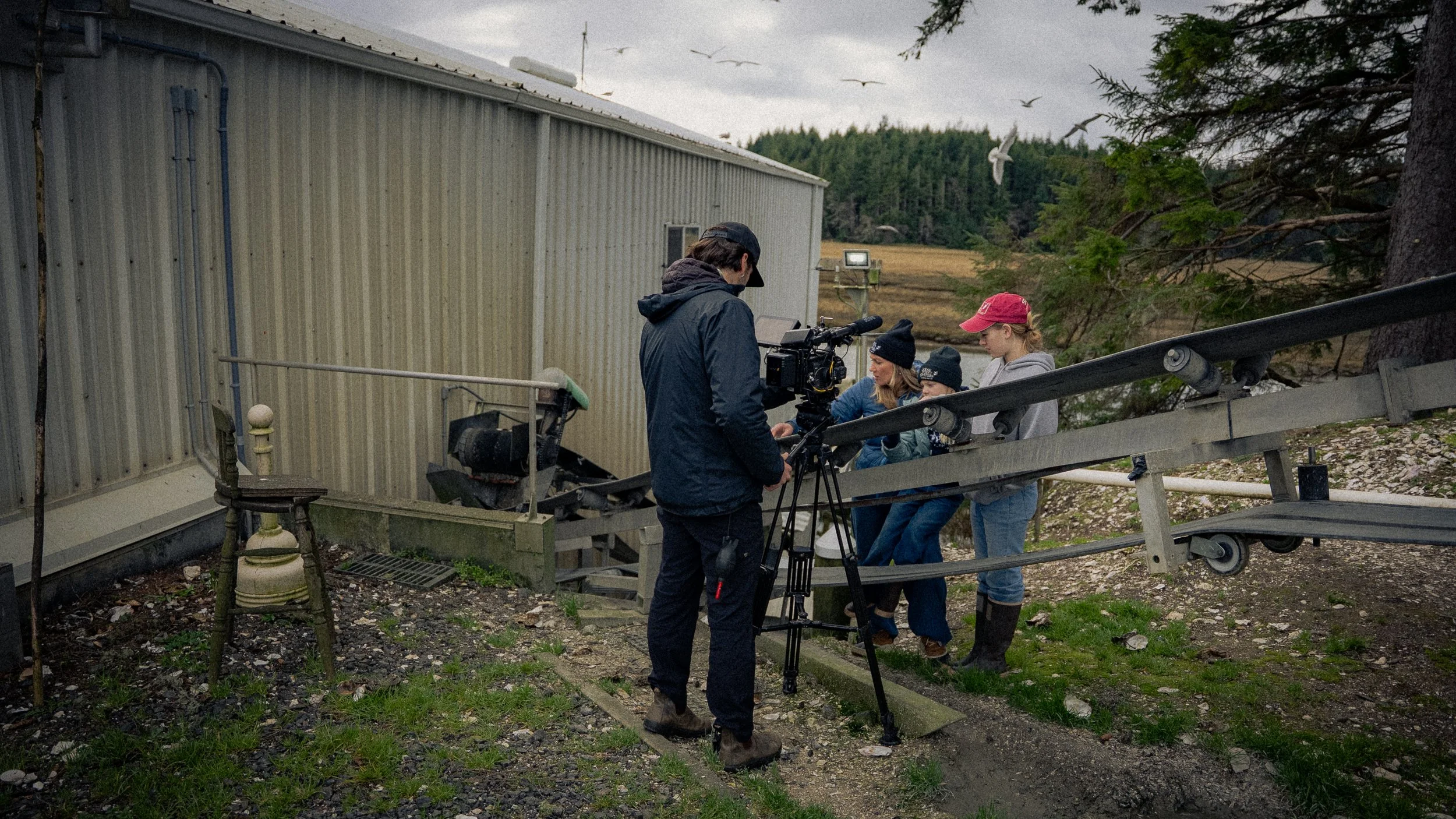
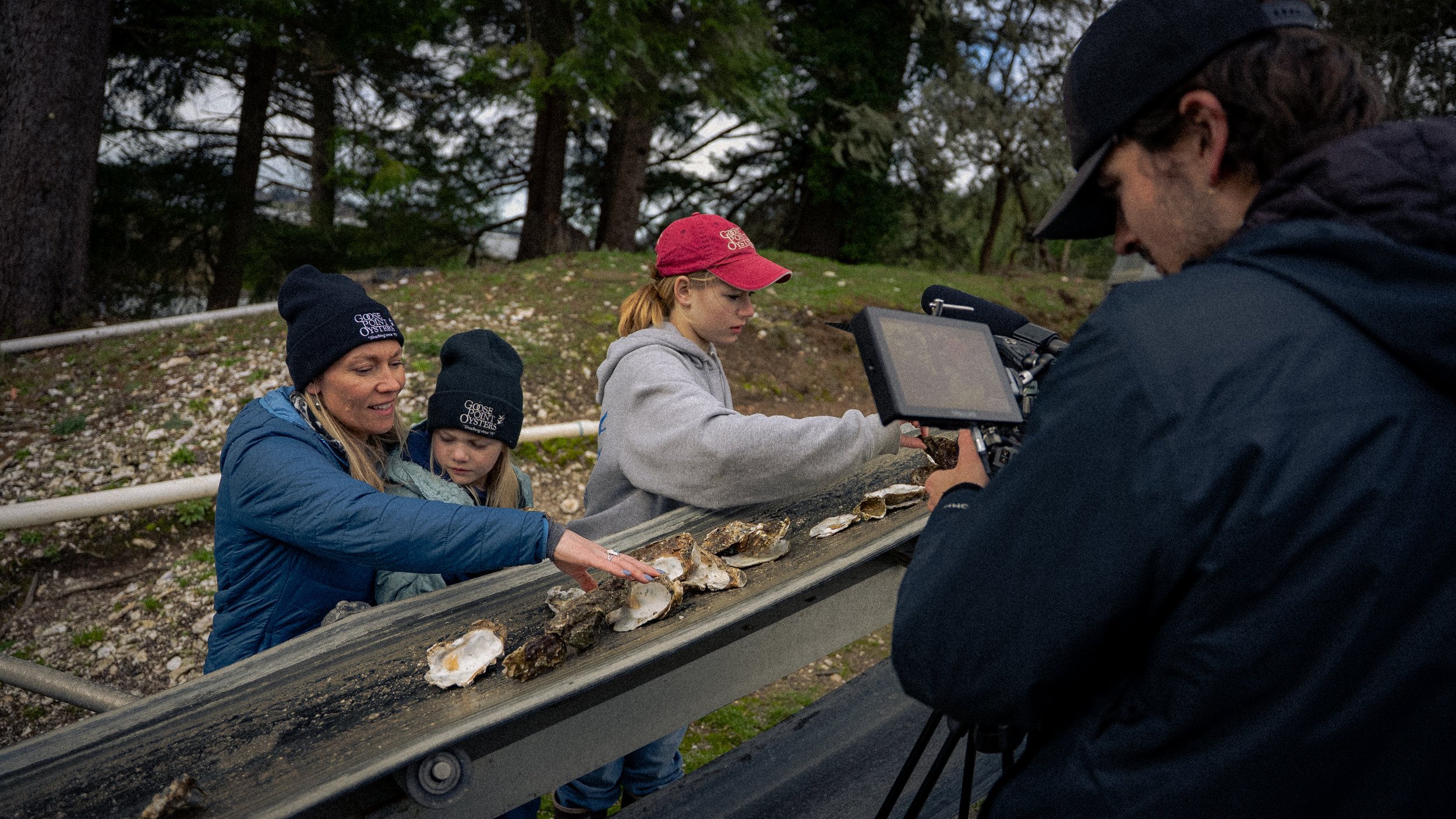
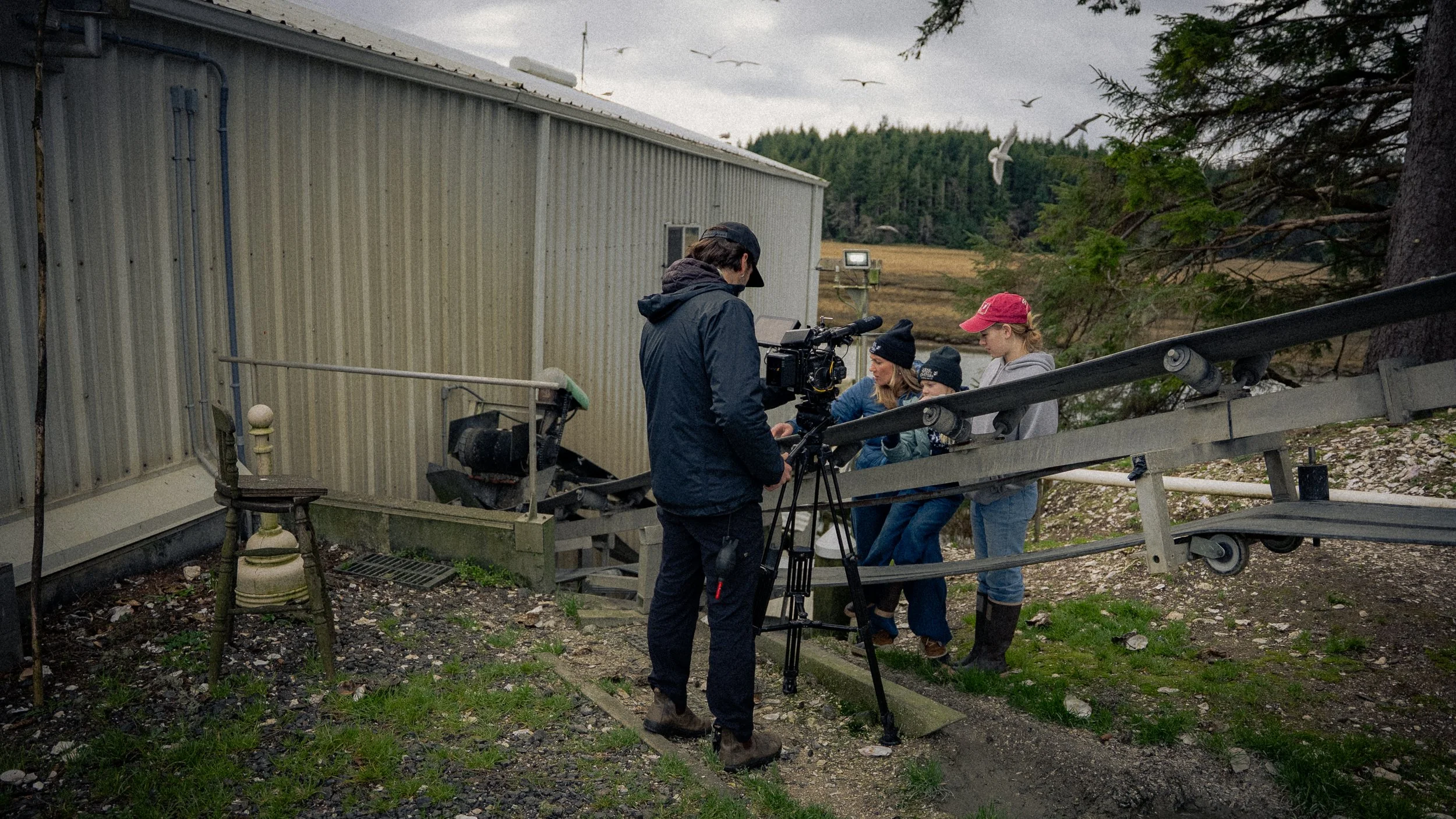
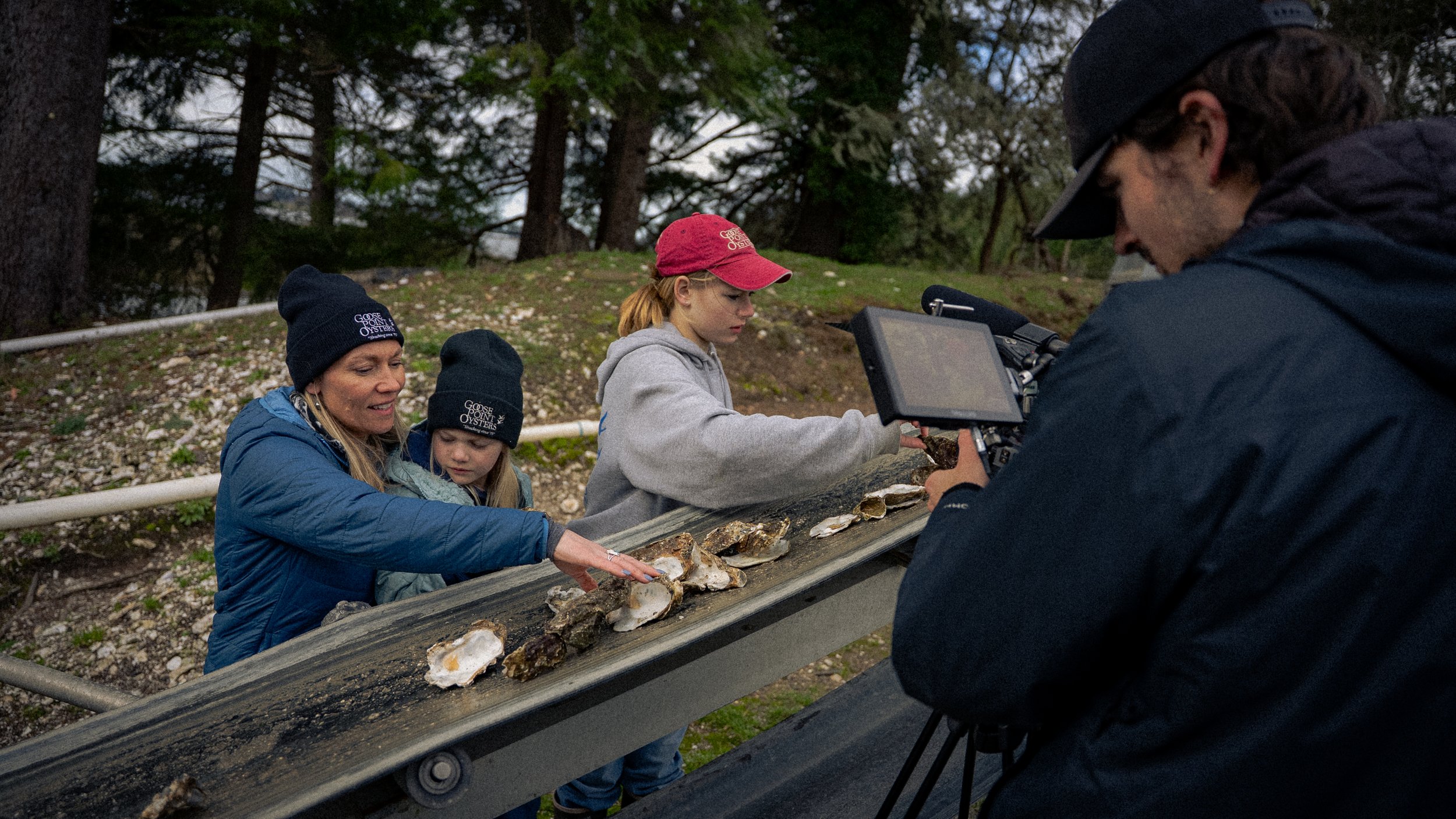
Nisbet Family at Oyster Shell Belt
Storyboard
We approached the film as a day in the life of Kathleen and her family. From morning to evening, we wanted to show what it takes to run an oyster farm.
We broke the story into six key scenes:
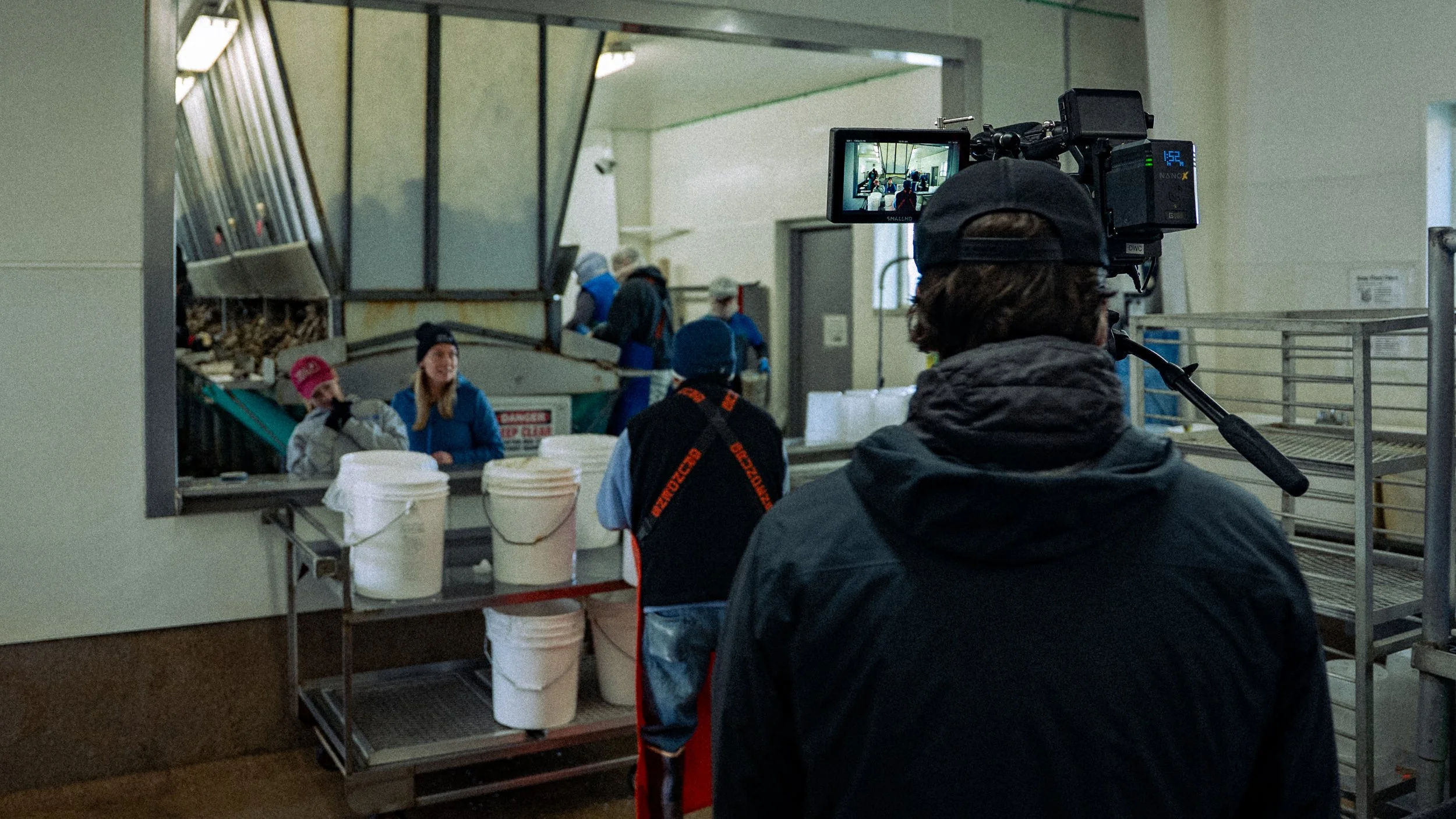
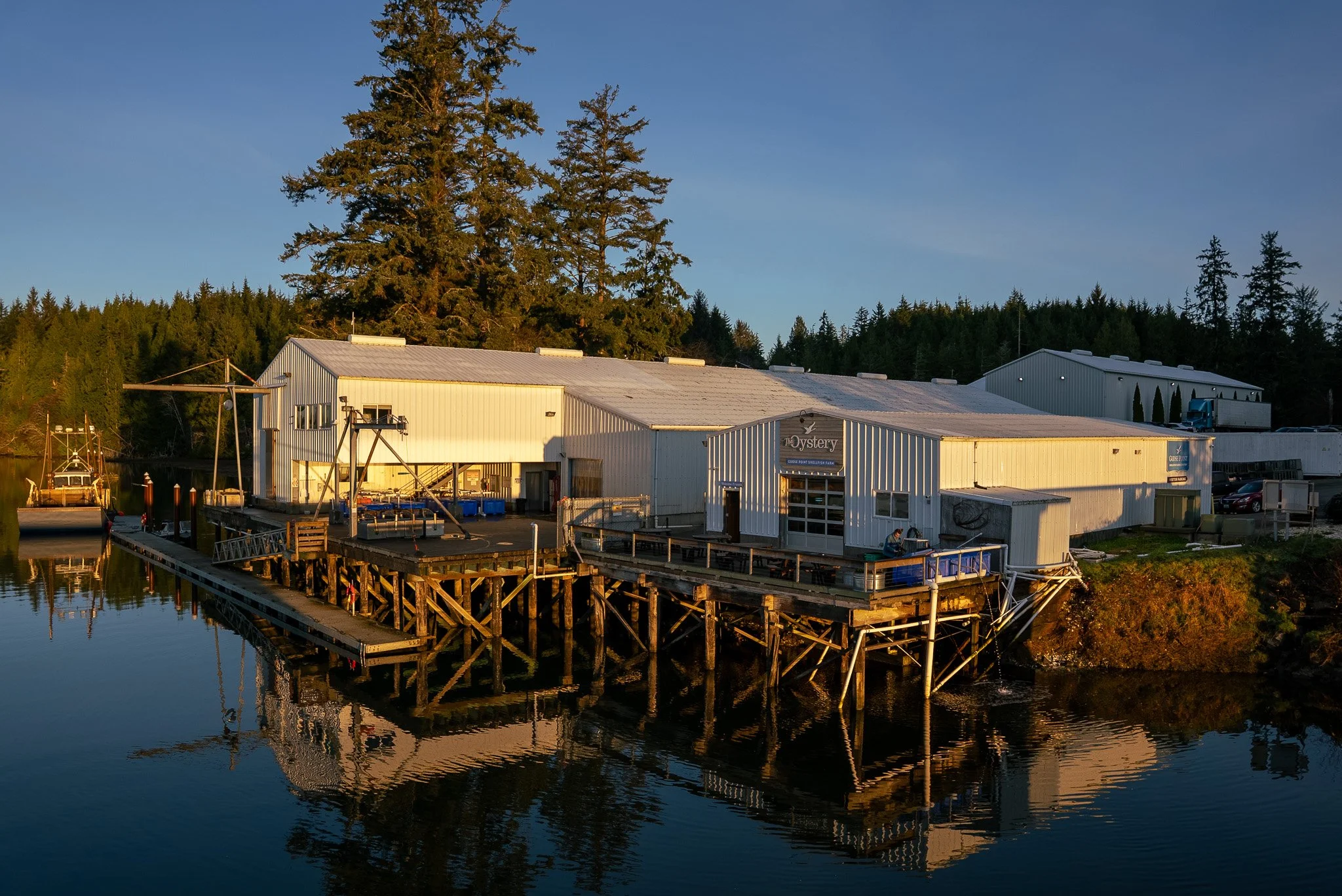
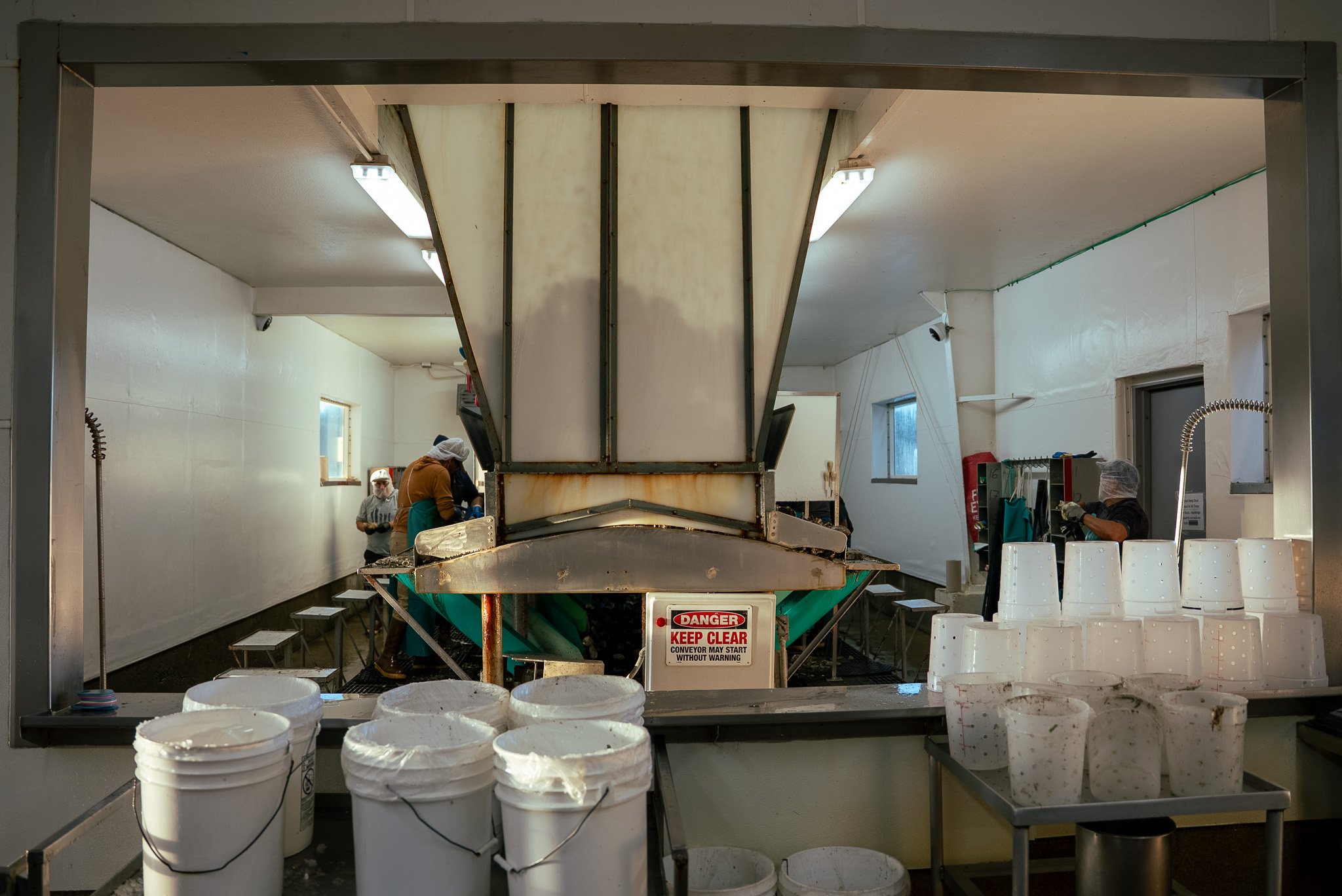
Oyster processing center
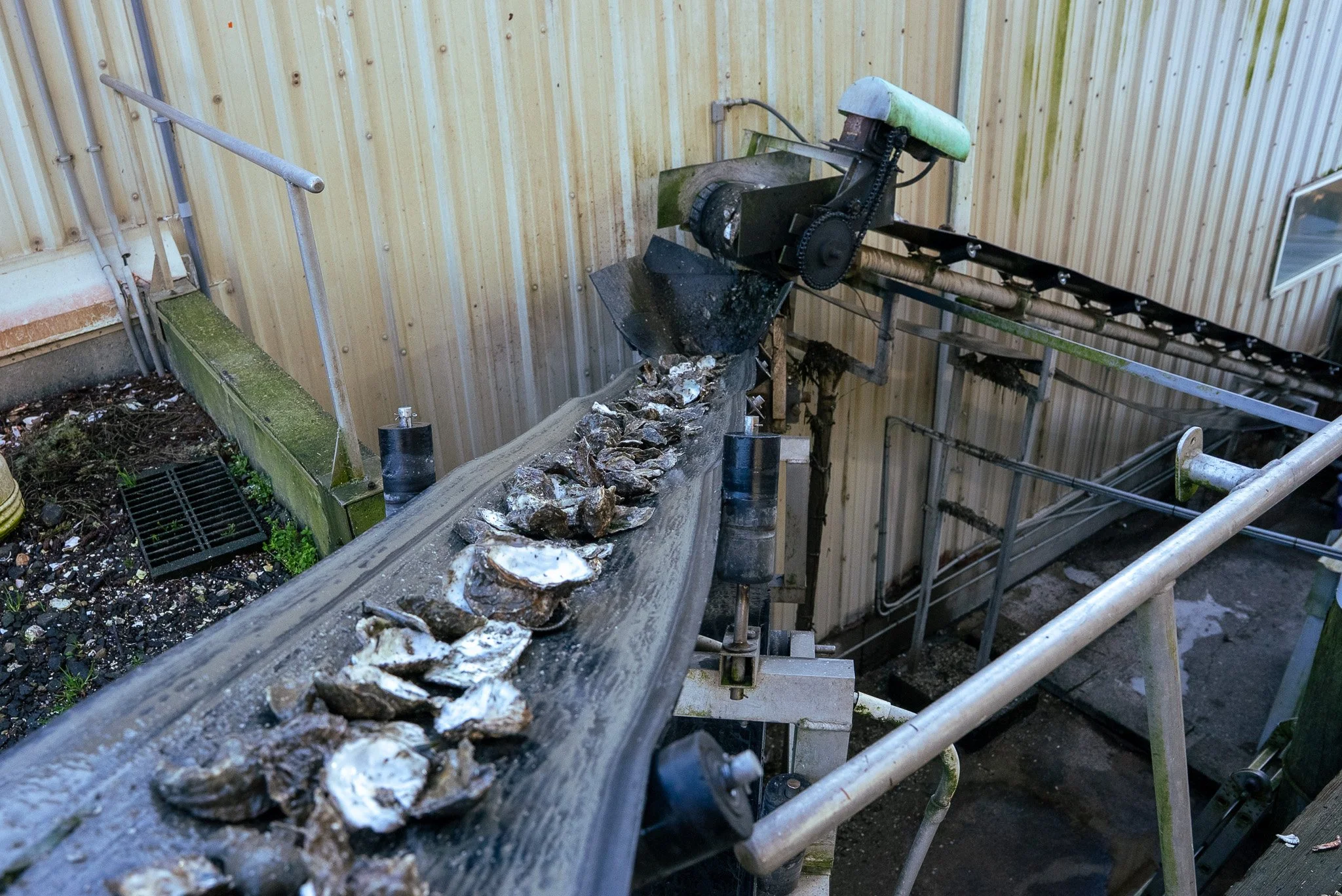
Conveyor belt operations
Oyster shell pile
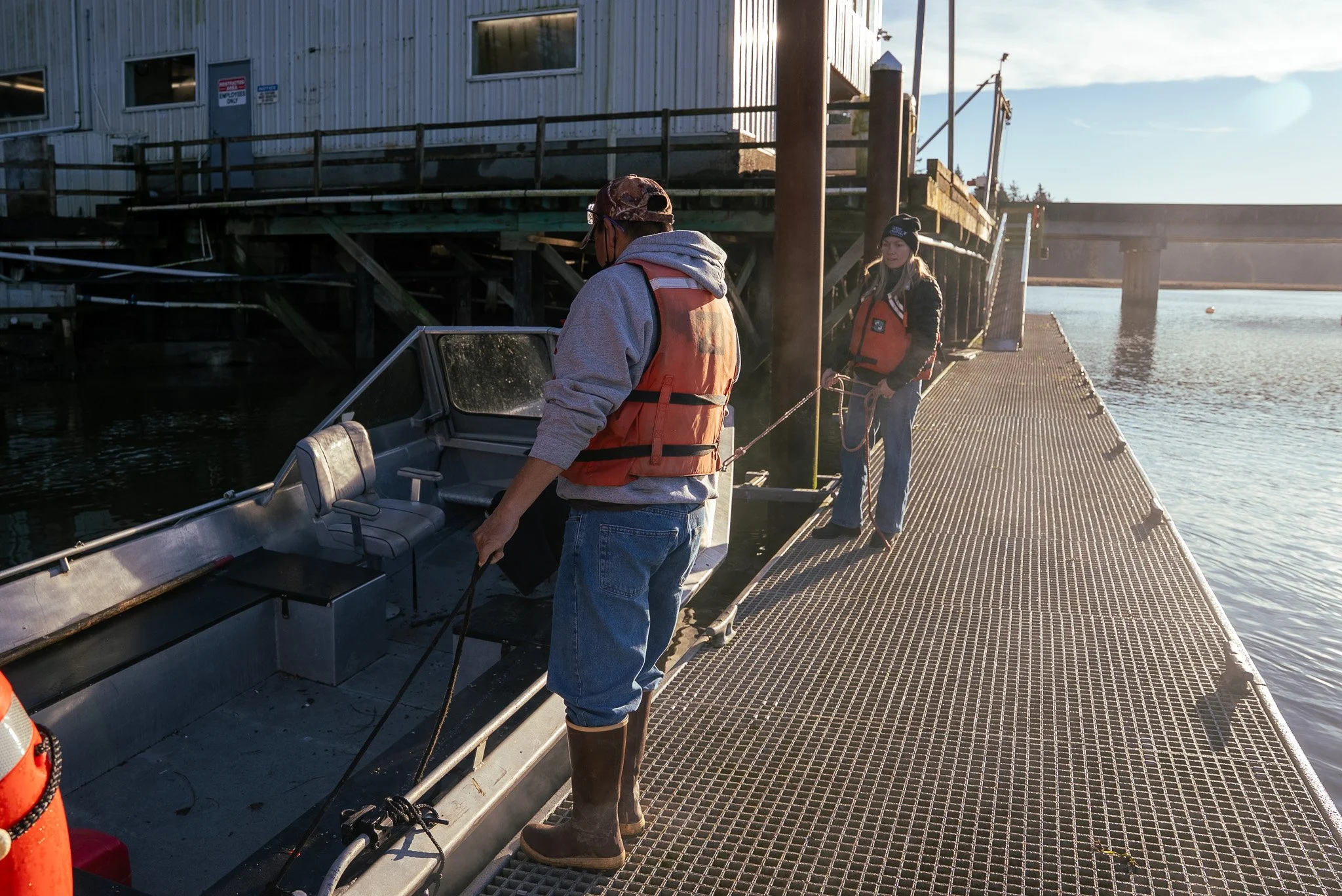
Small Topanga boat
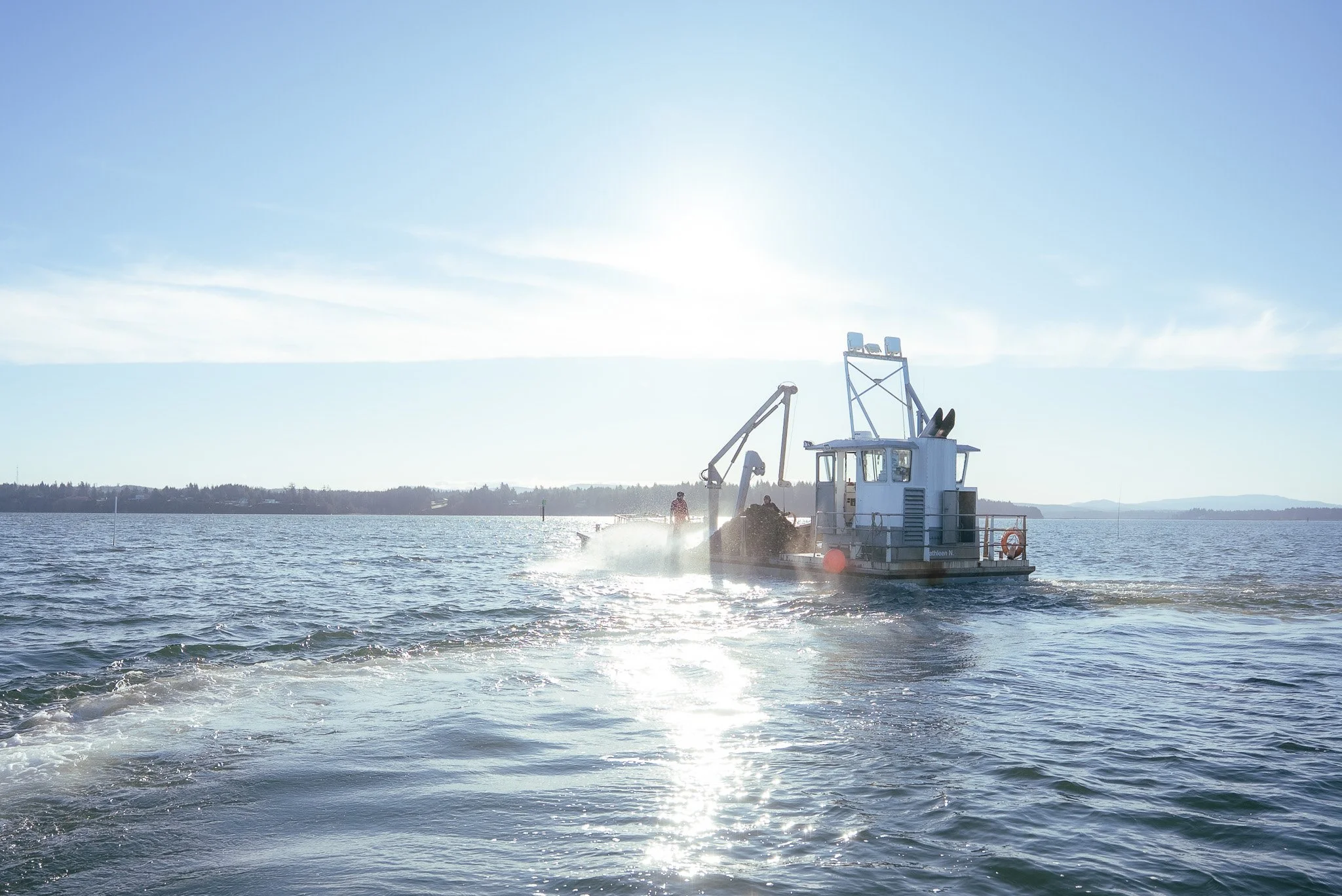
Harvesting and planting
Return to the processing center
Each of these locations was essential, but we made a deliberate choice to include Kathleen’s daughters throughout. This perspective helped differentiate the piece. It added emotional depth and gave the story a generational lens that felt unique.
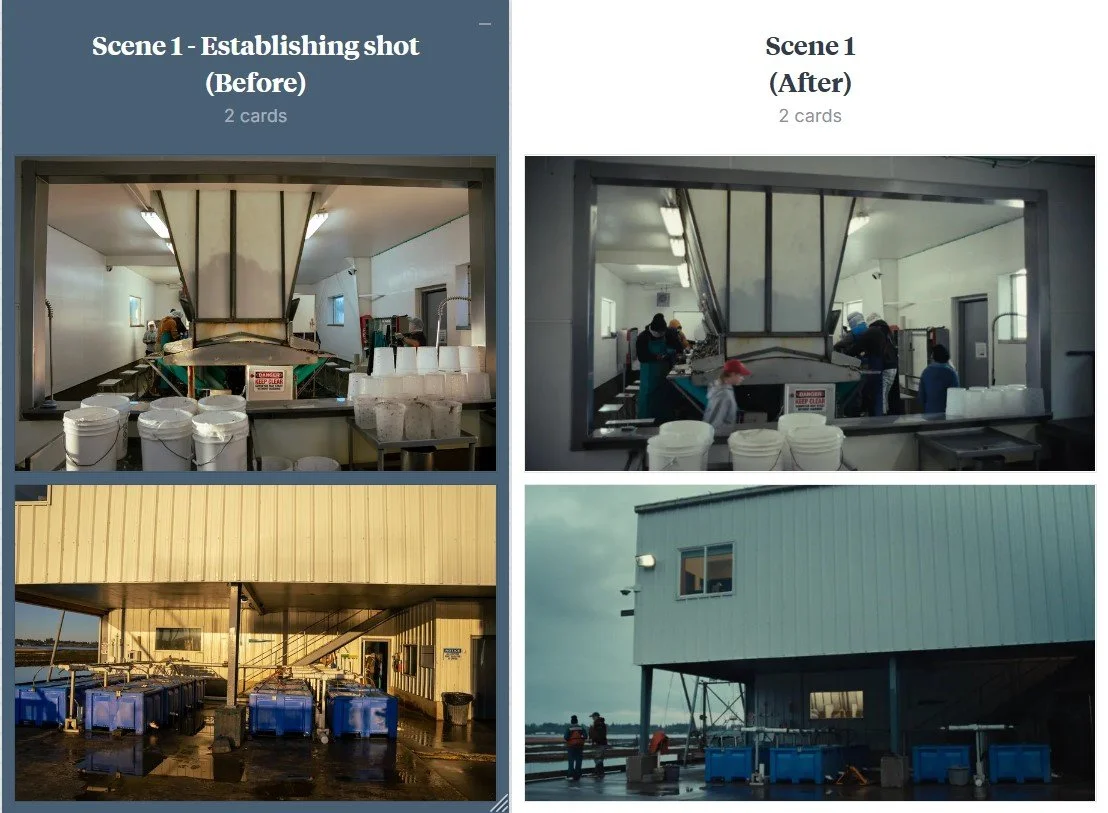
Cinematography and Shot Listing
Documentary work is unpredictable, but preparation creates clarity. Our shots are never random. Every team member needs to understand the vision so we can move with intention.
We shot this project over two days, and the biggest factor was the sun. We had limited windows during sunrise and sunset on both days. Those moments defined the beginning and end of the film.
Scenes one through six were structured to feel like a full day. Because of that, the position and quality of light had to remain consistent.
Shot Timing:
Certain moments during the shoot required precise setup to capture key parts of the oyster operation. These shots often involved rigging gear or coordinating specific actions, which meant clear communication and planning with Kathleen and her team was essential. Factors like weather added another layer of complexity, and in some cases we needed machinery or lighting activated at just the right time. Flagging these needs early in the day helped everyone stay aligned and kept the production moving efficiently.
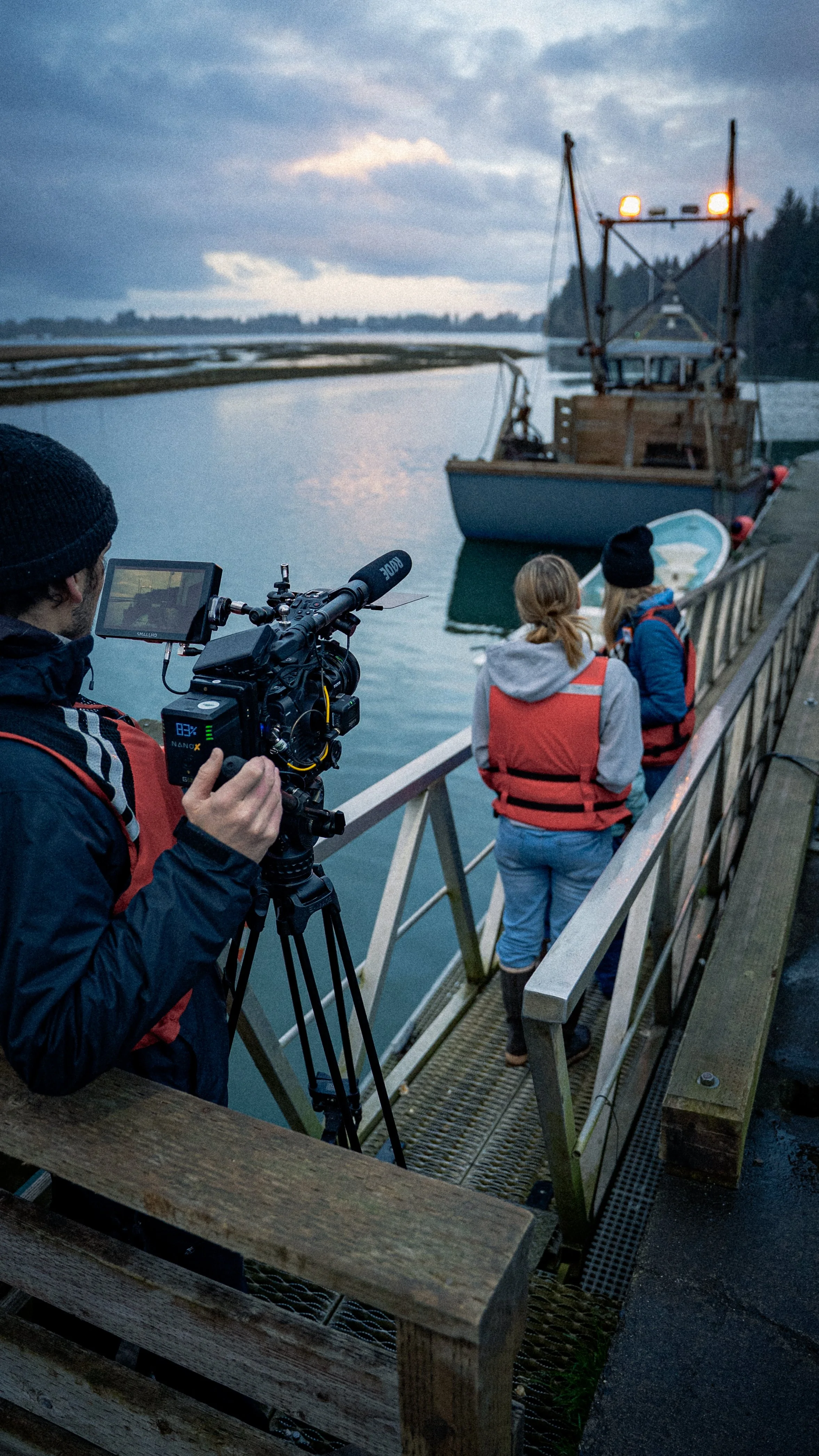
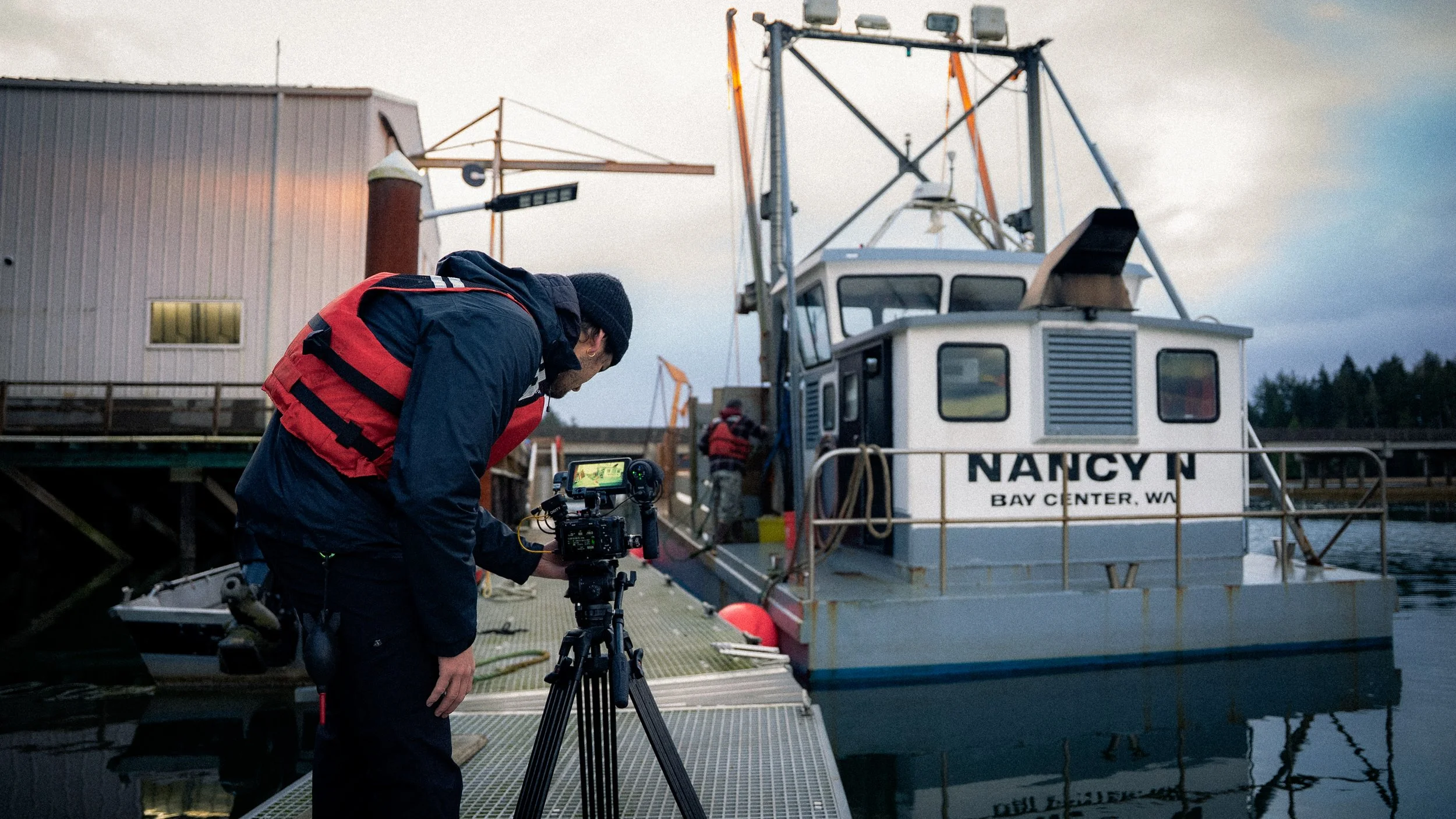
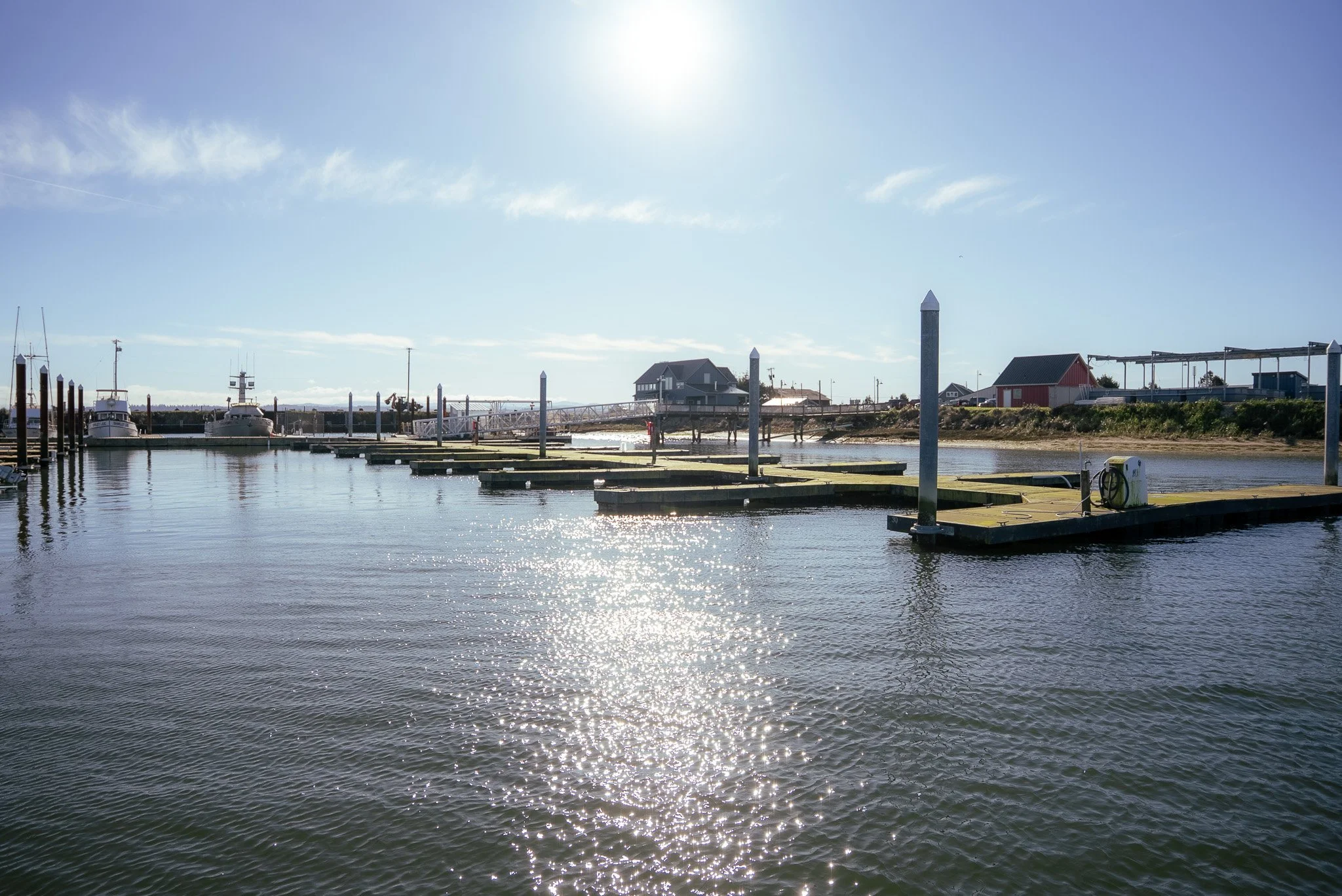
For example, we coordinated for the orange sodium lights on a fishing boat to be switched on at a specific moment, or for the Nisbet family to walk a particular path along the dock. Each of these moments required careful timing and collaboration. Even a single shot could take 15 minutes or more to get right, balancing exposure, dialing in focus, adjusting tripod height, and guiding on-screen movement. Capturing these scenes is a deliberate process, built on patience, communication, and a strong sense of teamwork.
Working with Non-Fiction Talent
Our subjects are not actors. They are farmers, business owners, and real people living their lives. It is our responsibility to create an environment where they feel comfortable.
Preparation is everything. We communicate openly about what to expect. If a setup will take 30 minutes, we say that. If we are capturing something personal, we explain why.
People have real responsibilities. They need to know when they can step away or focus on their work. Transparency builds trust.
When we arrived in Willapa Bay, we spent over an hour with Kathleen before filming anything. We talked through the project and made sure she felt comfortable. That time was essential. As we got to know her and her family, the story naturally became stronger.
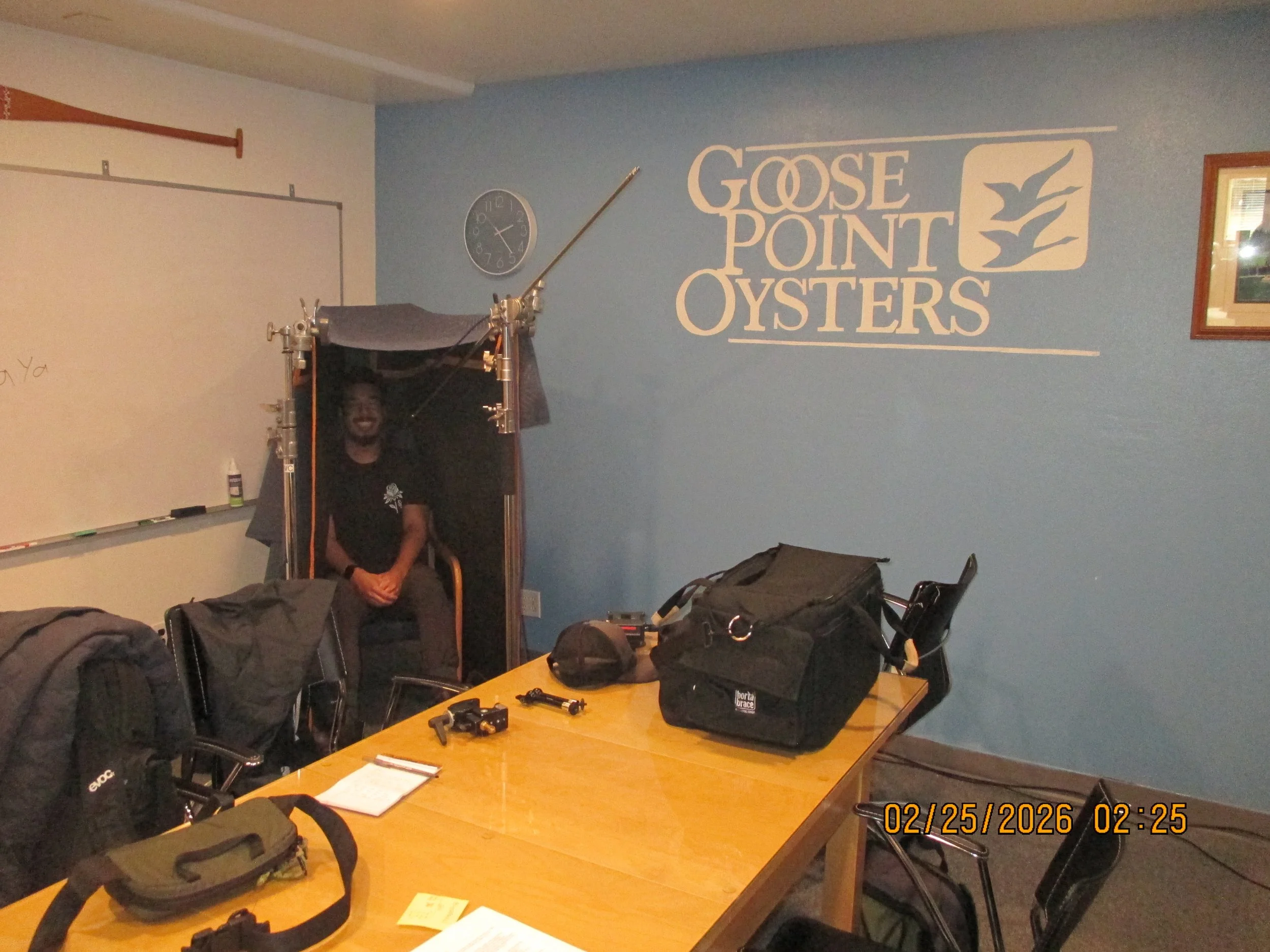
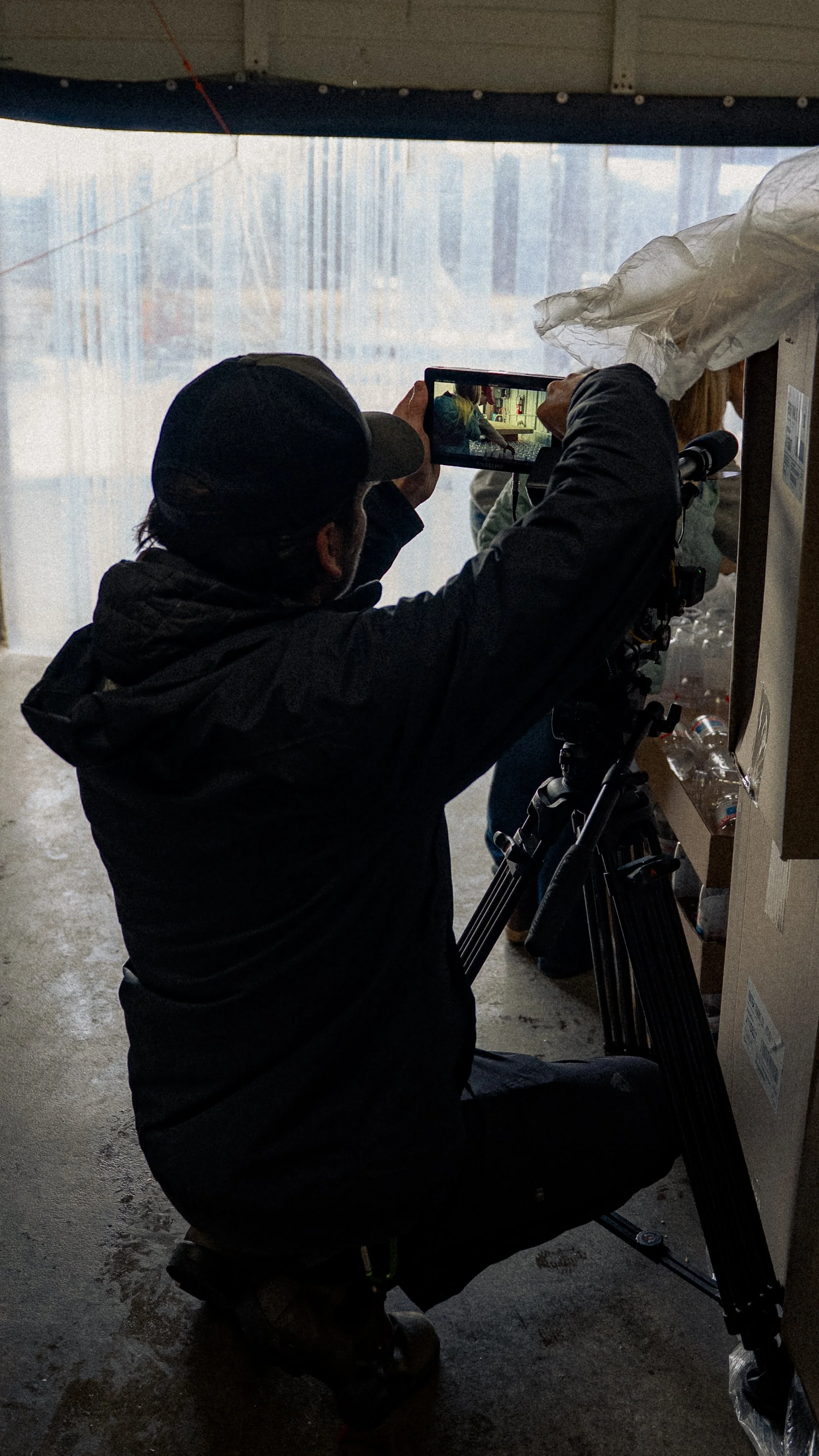
Our sound booth captured by 2006 digital camera
Interview
This project included an interview, but we chose not to show it on camera. We wanted the audience to stay immersed in the visuals.
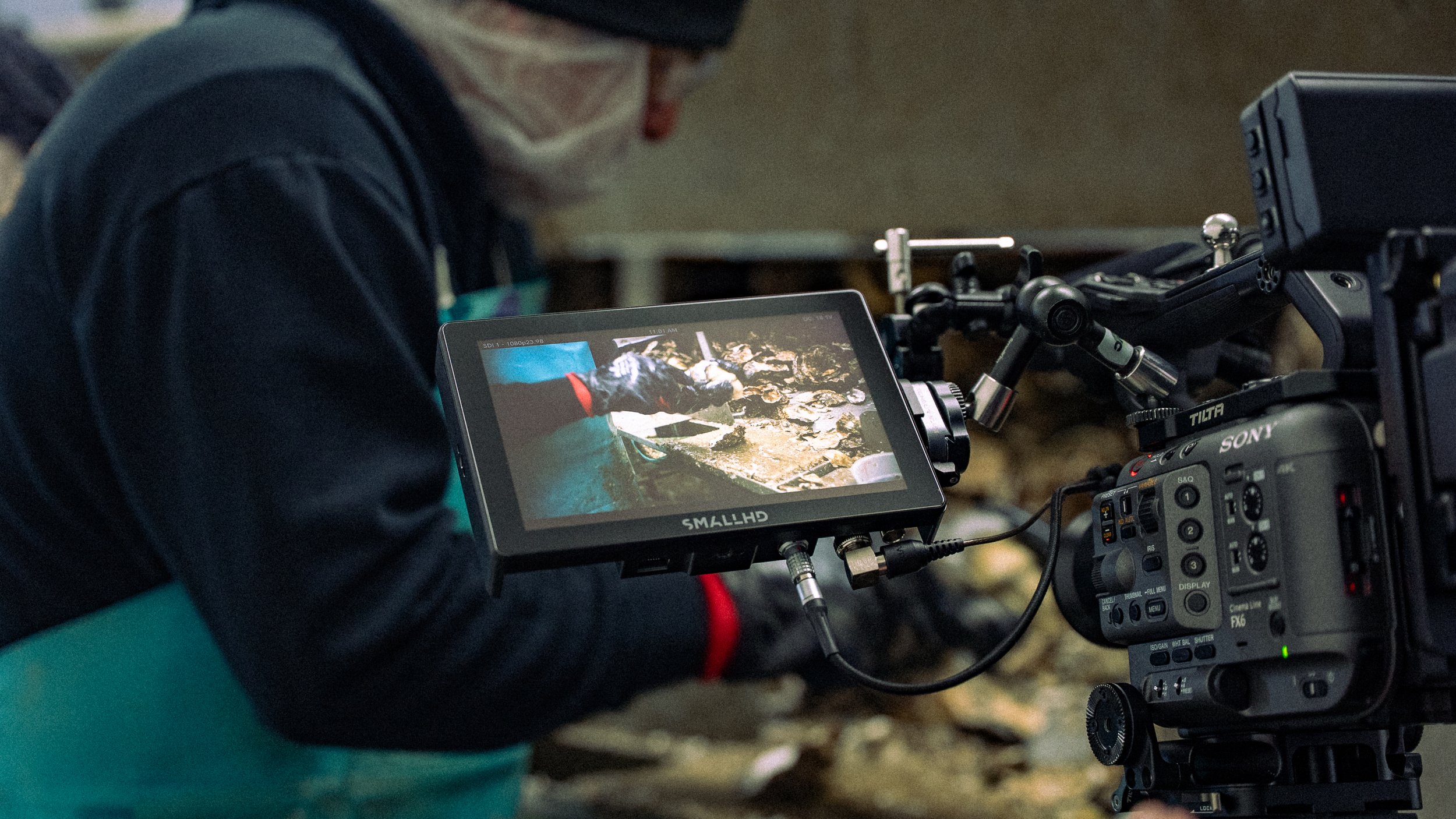
We built a makeshift sound booth to capture clean audio. Our setup was intentionally minimal. We did not bring large lighting setups because the environment would not support it.
We relied mostly on available light, with an Aputure 300d and a few tube lights as backup. We stayed flexible while remaining committed to our plan.
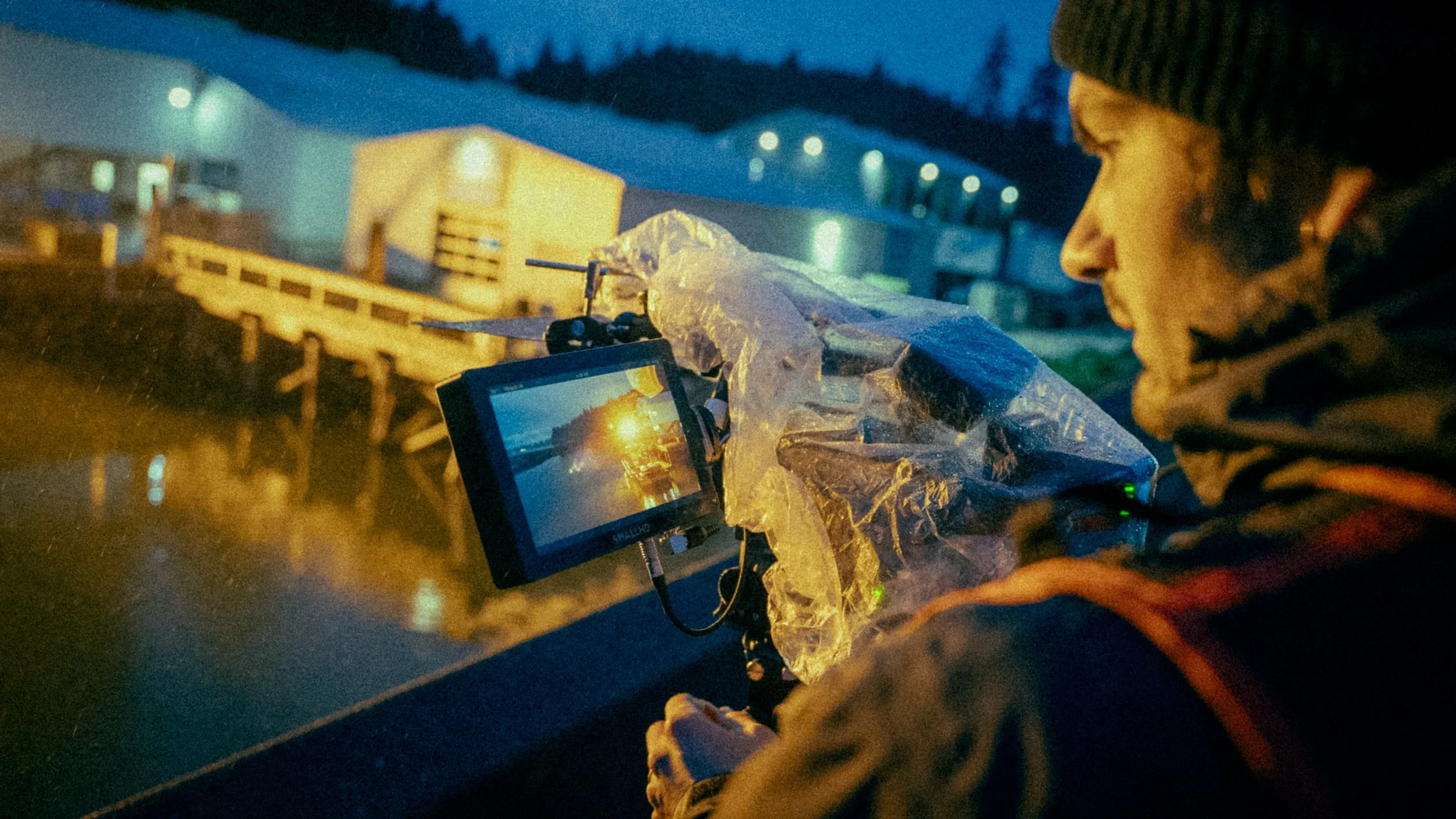
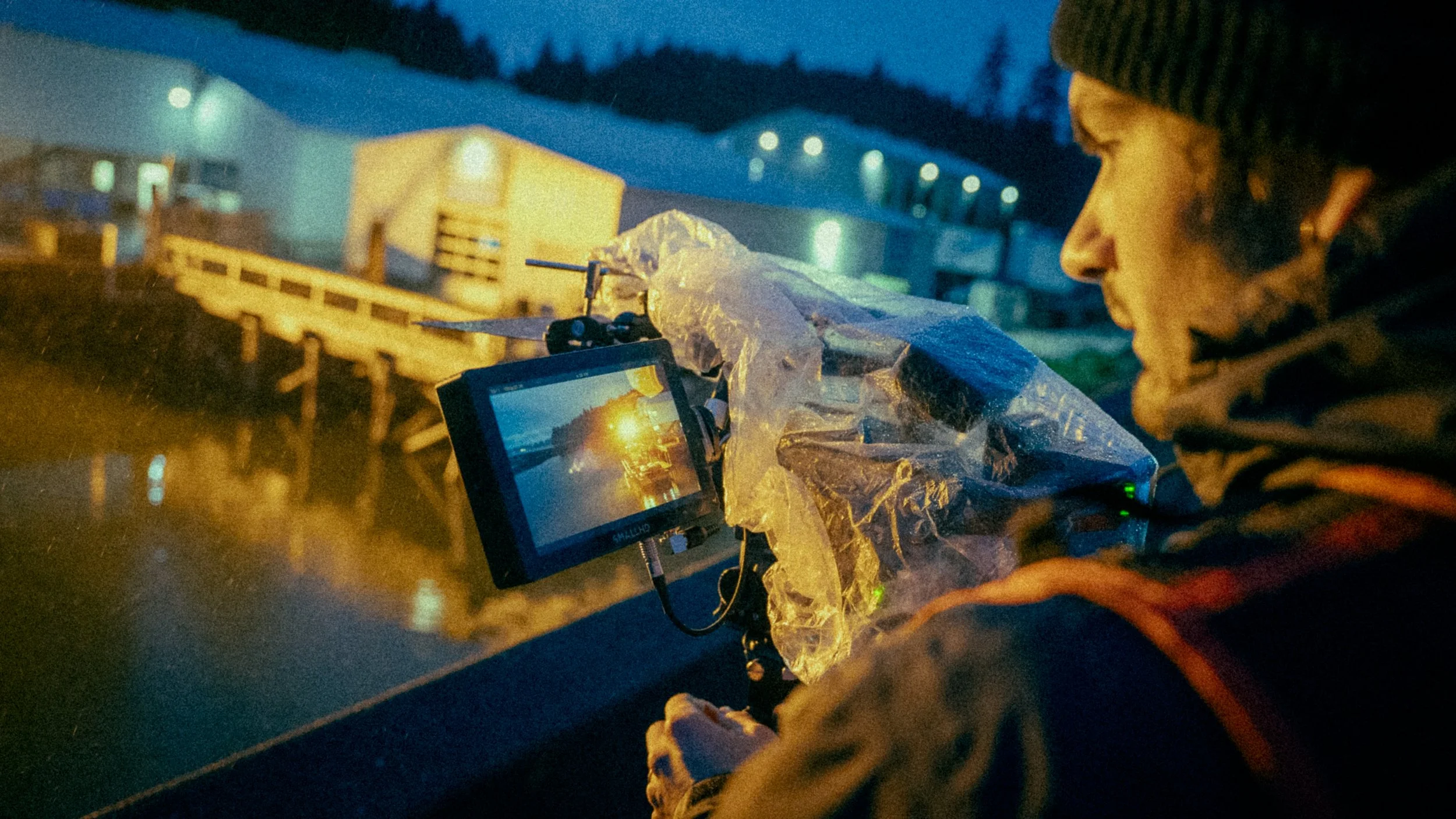
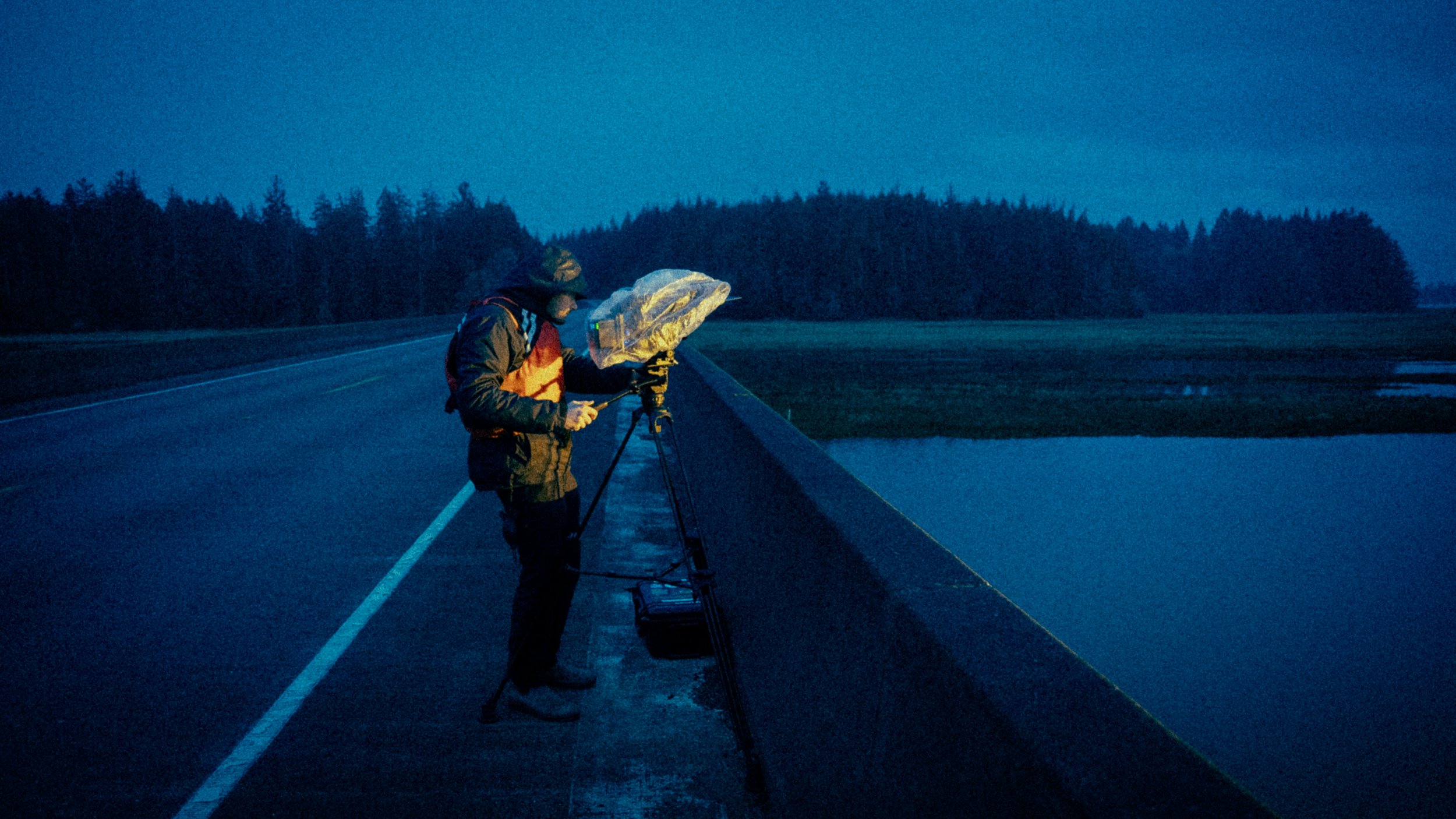
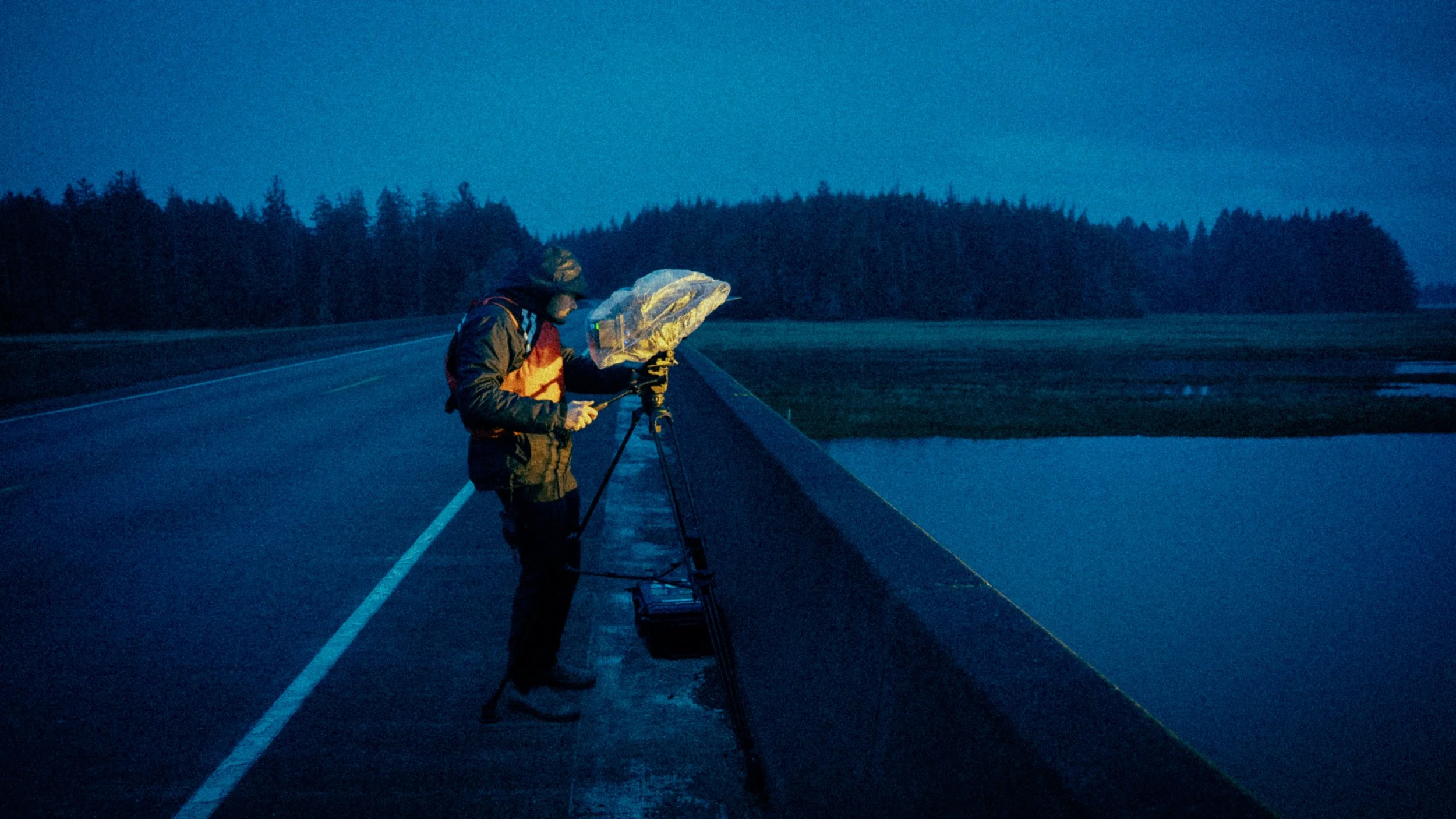
Dakota in the rain
The Weather
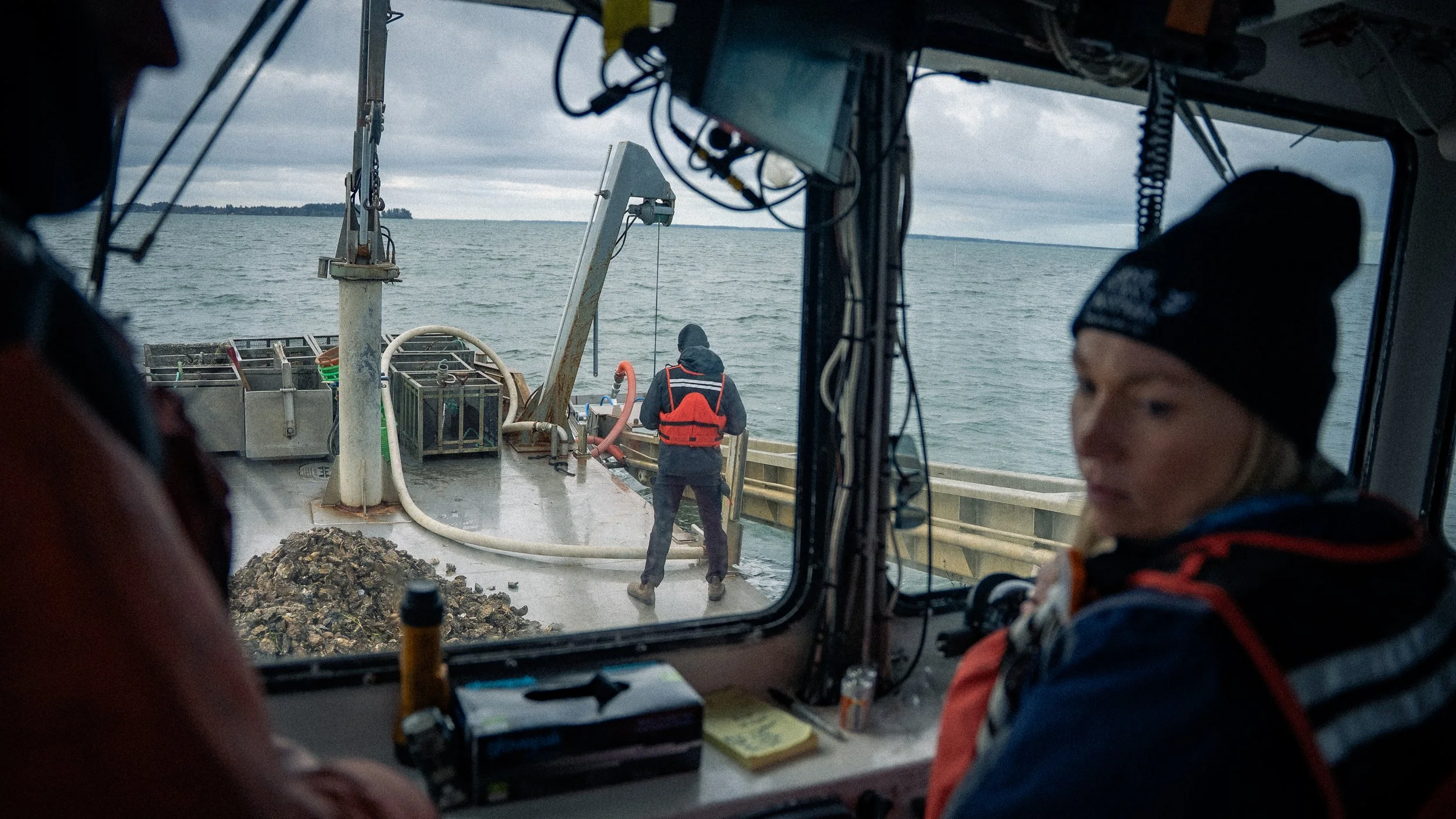
Weather was one of the biggest challenges. Oyster farming is also tide-dependent, which added another layer of complexity. Harvesting and planting only happen during specific tide windows.
We had to coordinate with the tide calendar and Kathleen’s team while also adapting to shifting weather conditions.
On shoots like this, planning for consistency is critical. Matching skies and leaning into blue hour helped us maintain a cohesive look. Those softer moments added emotional depth to the story.
Minimal Crew
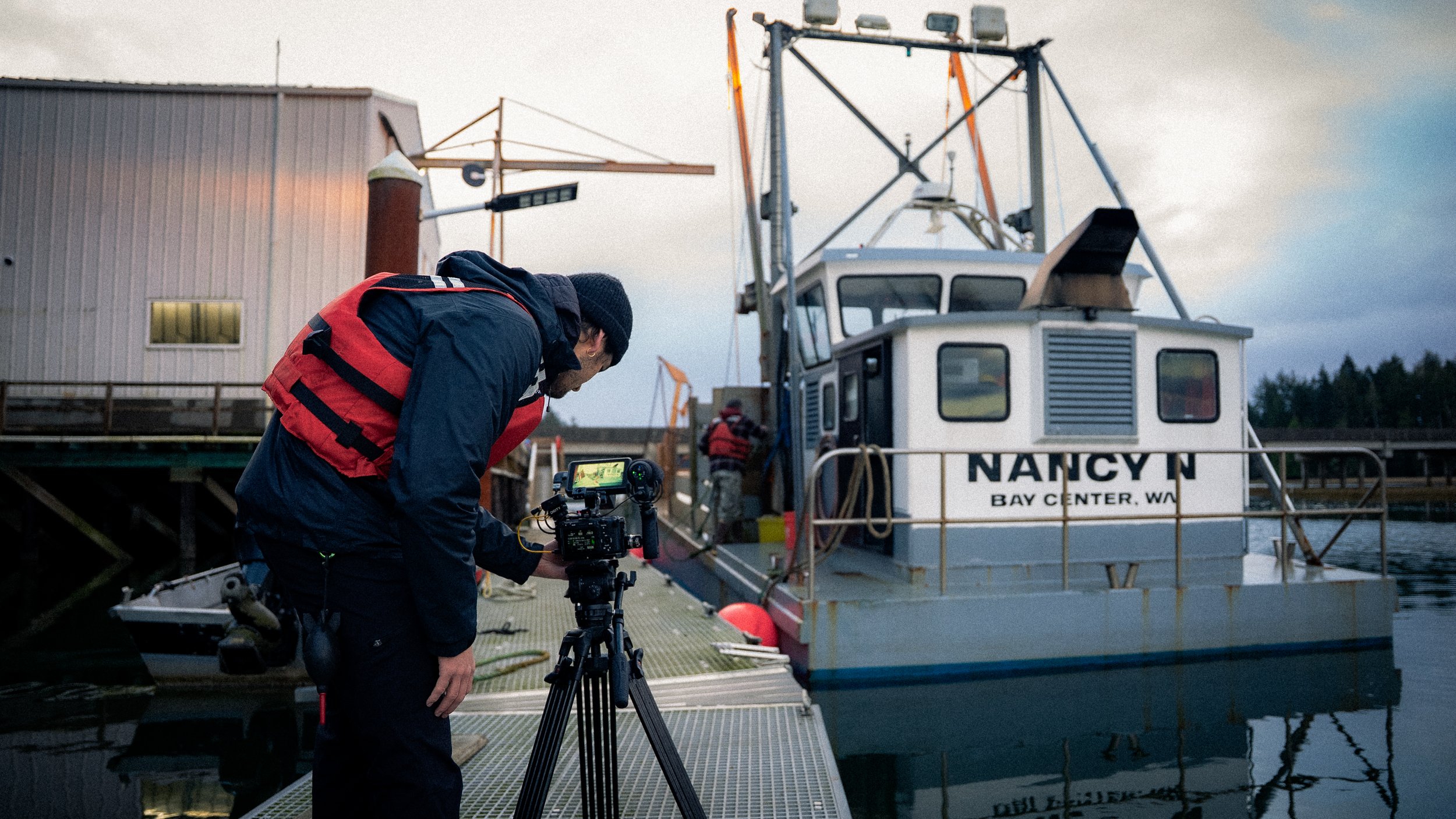
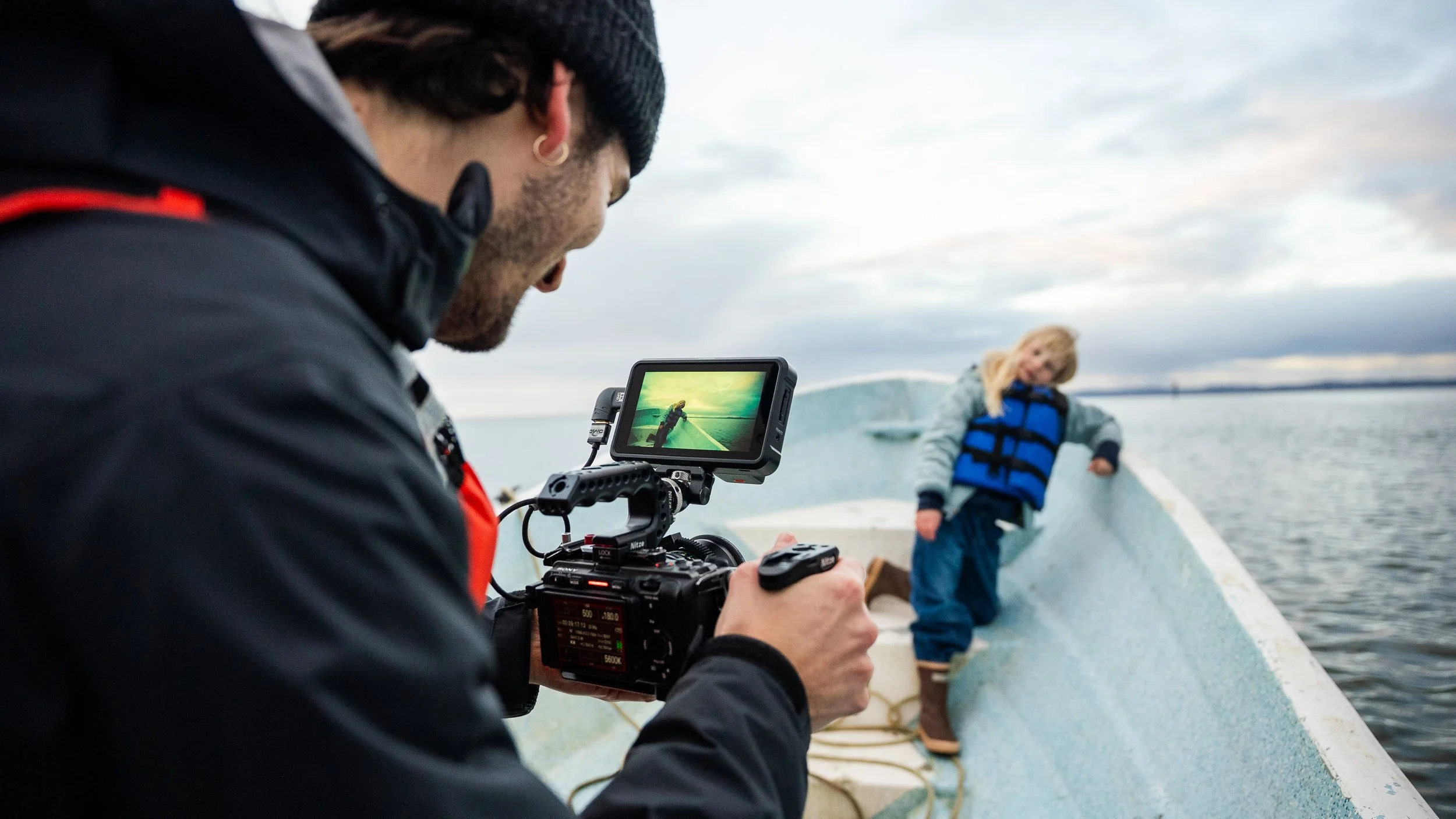
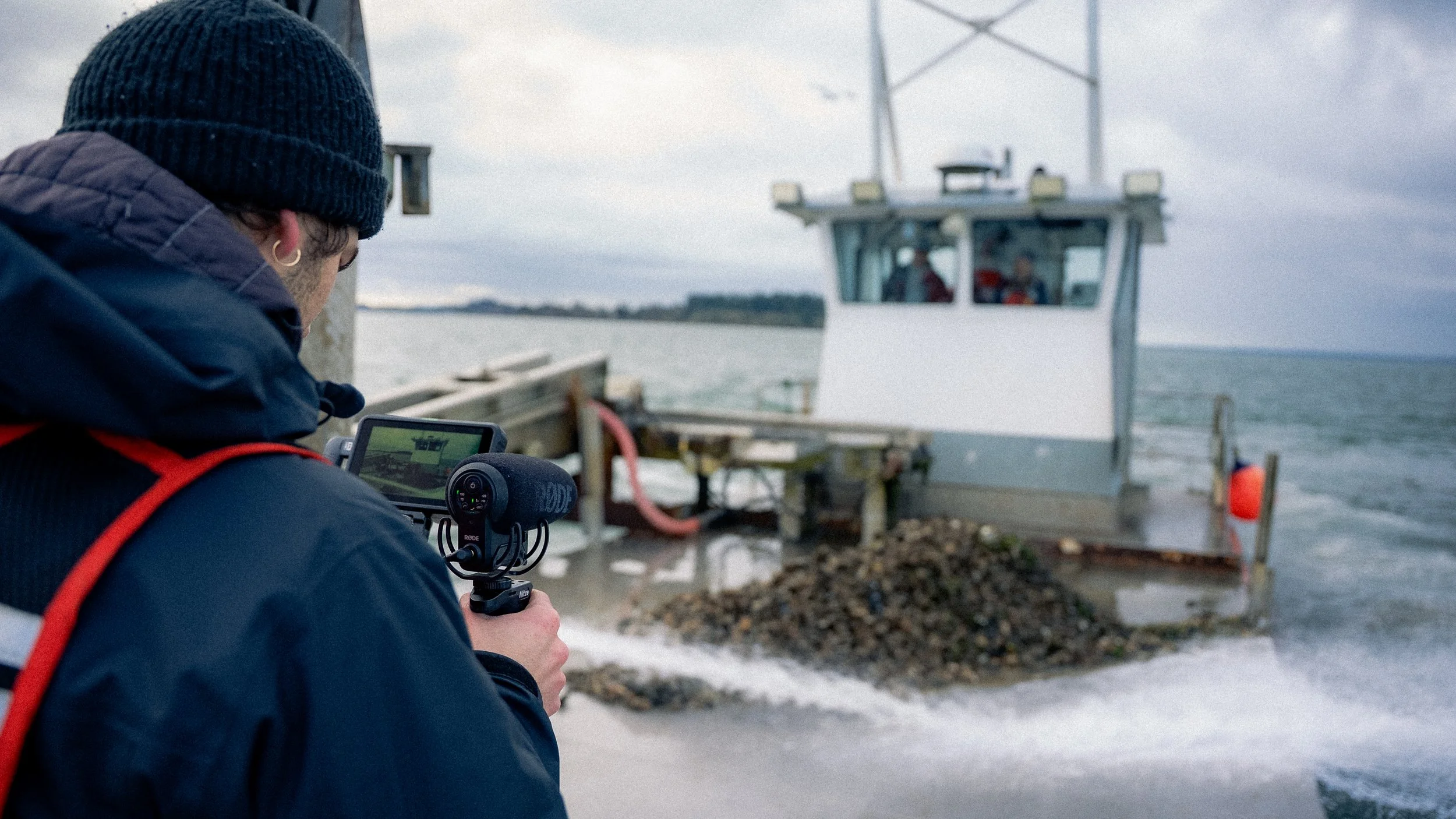
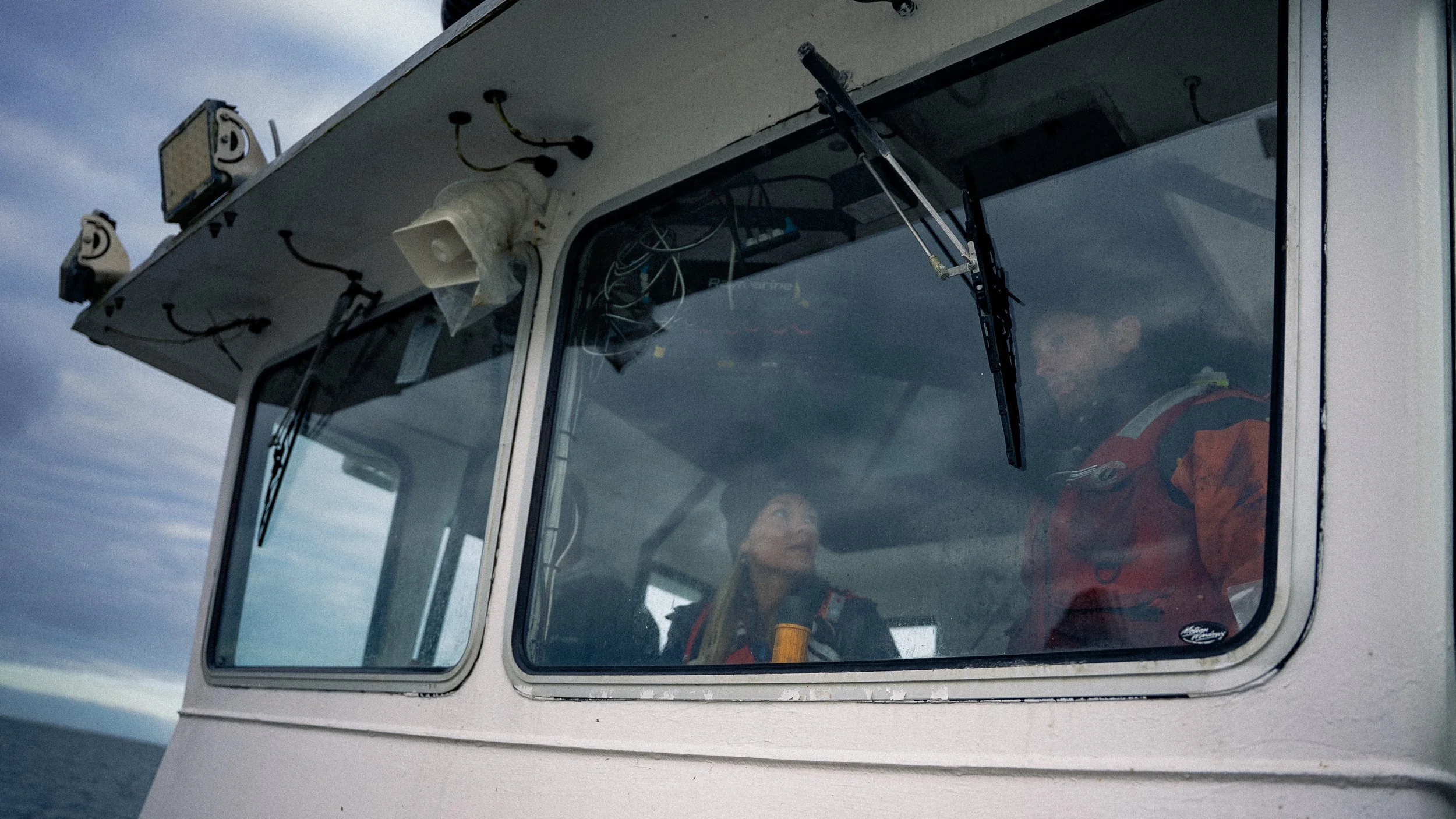
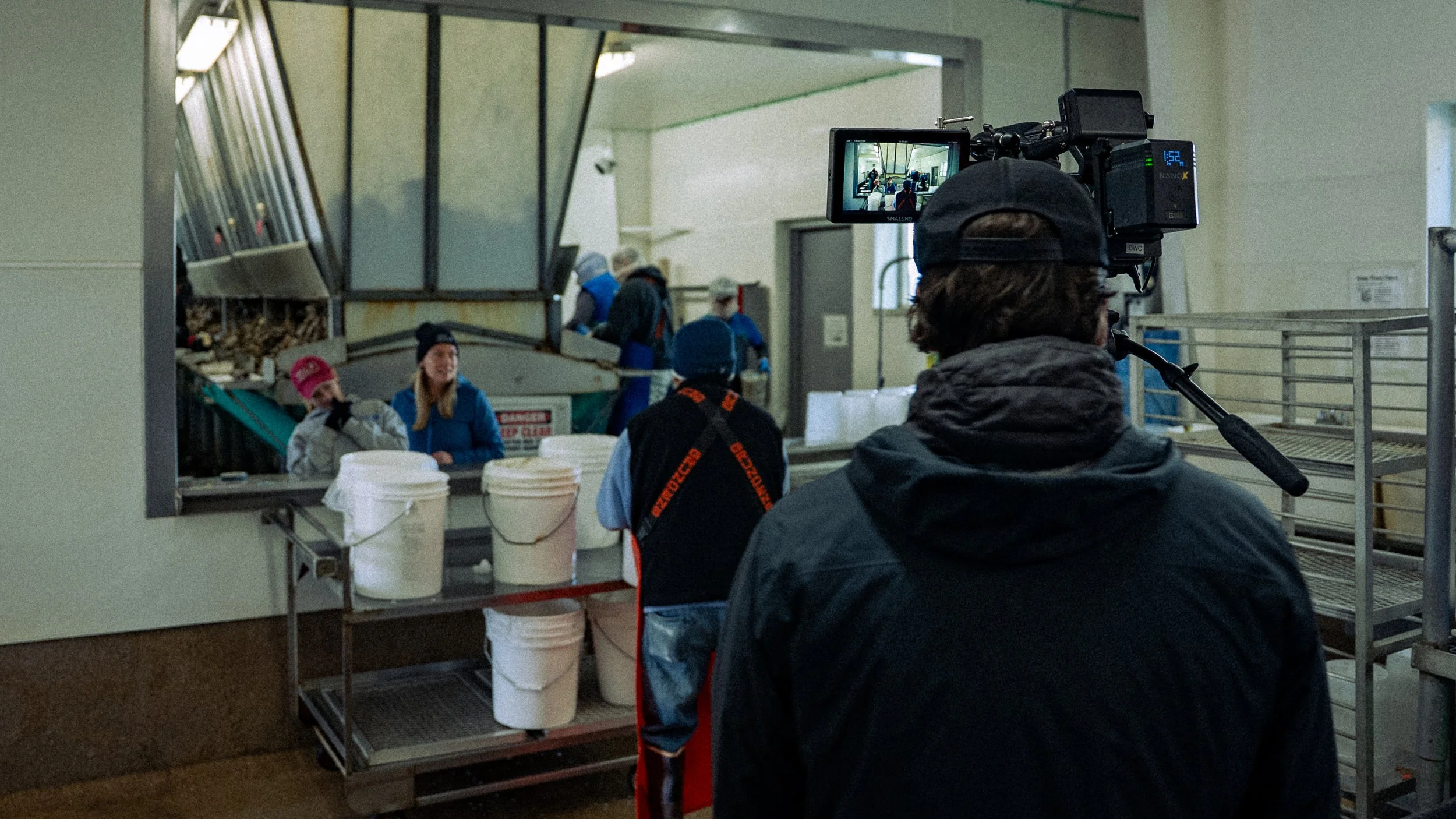
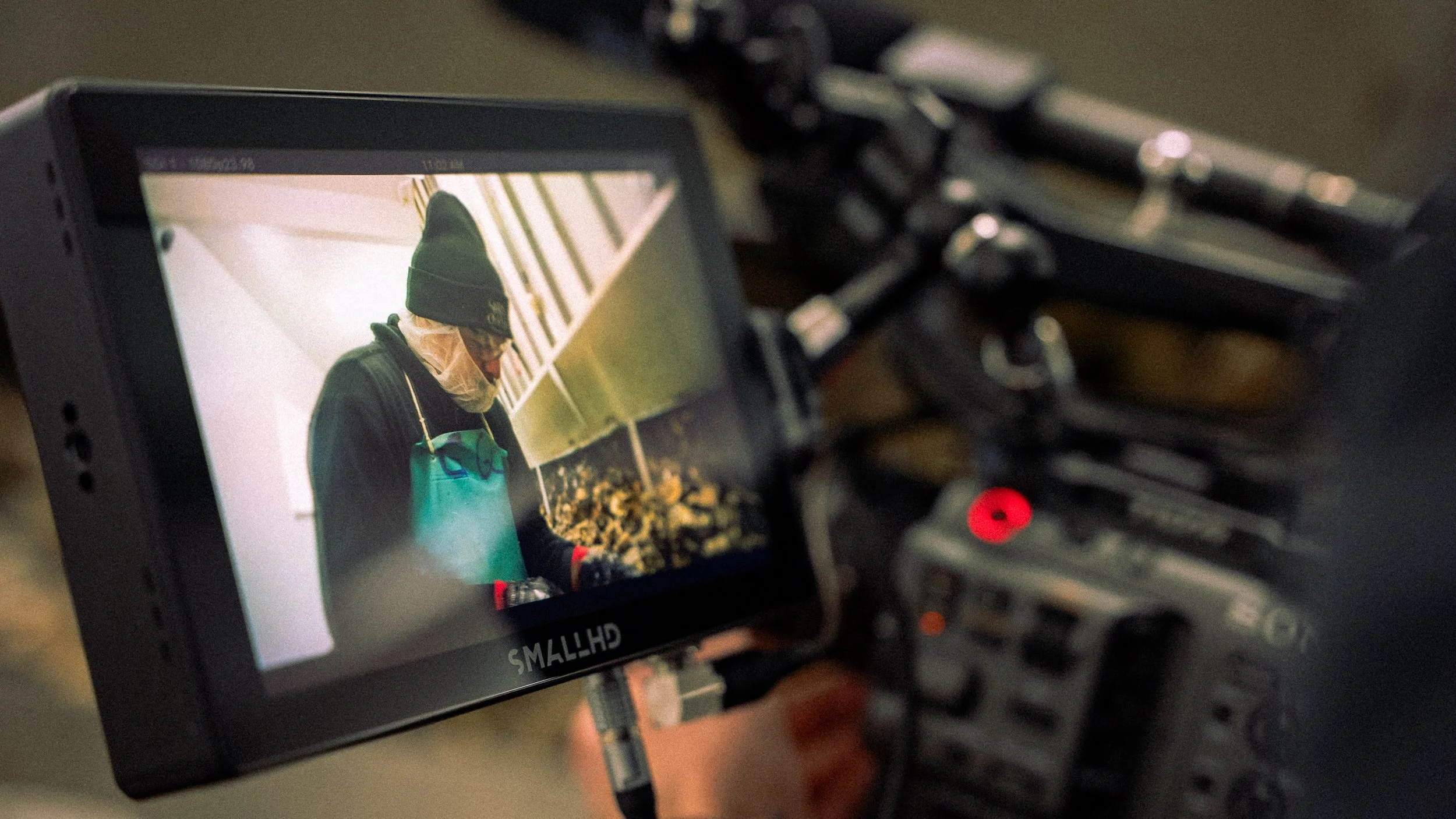
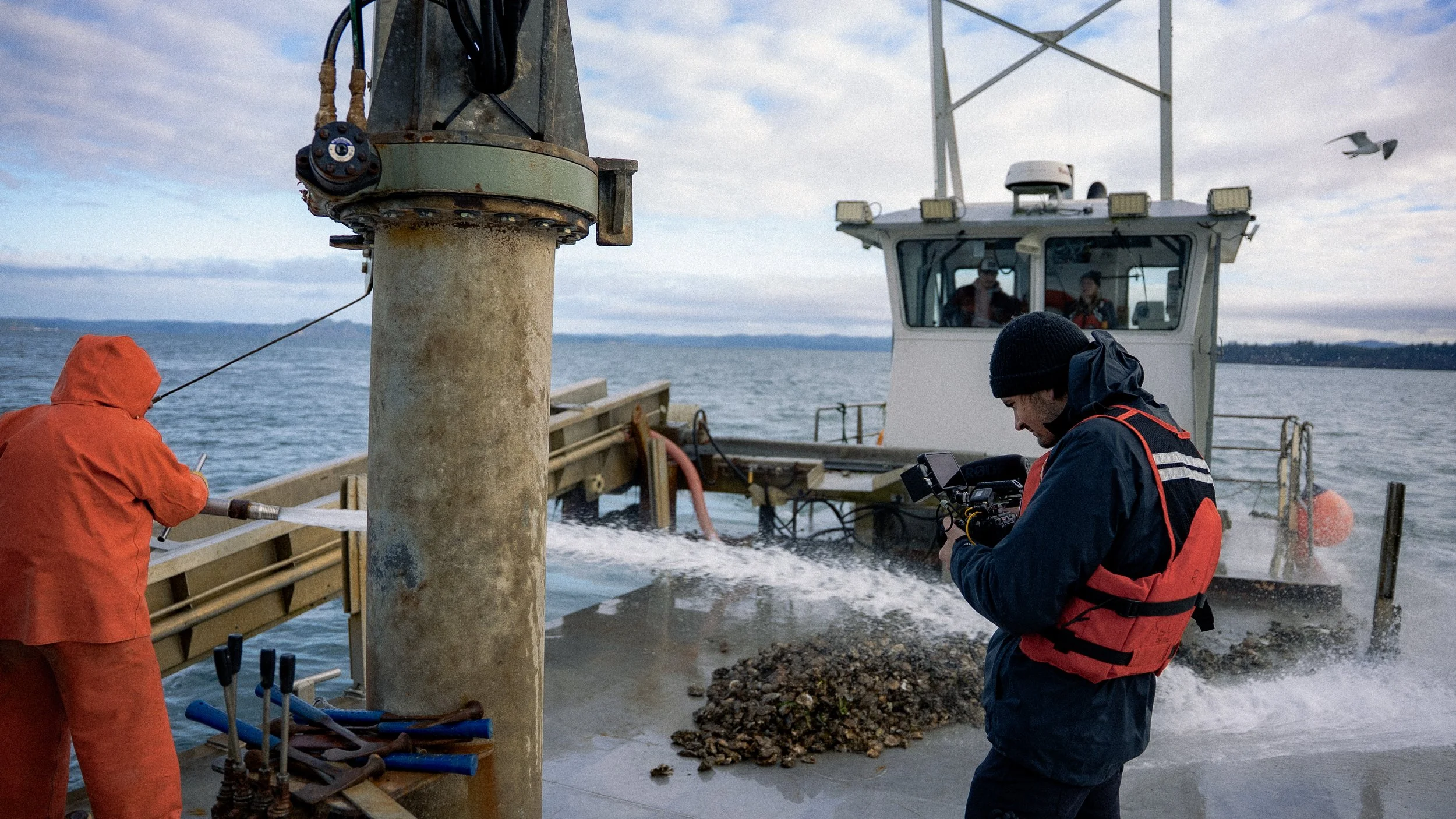
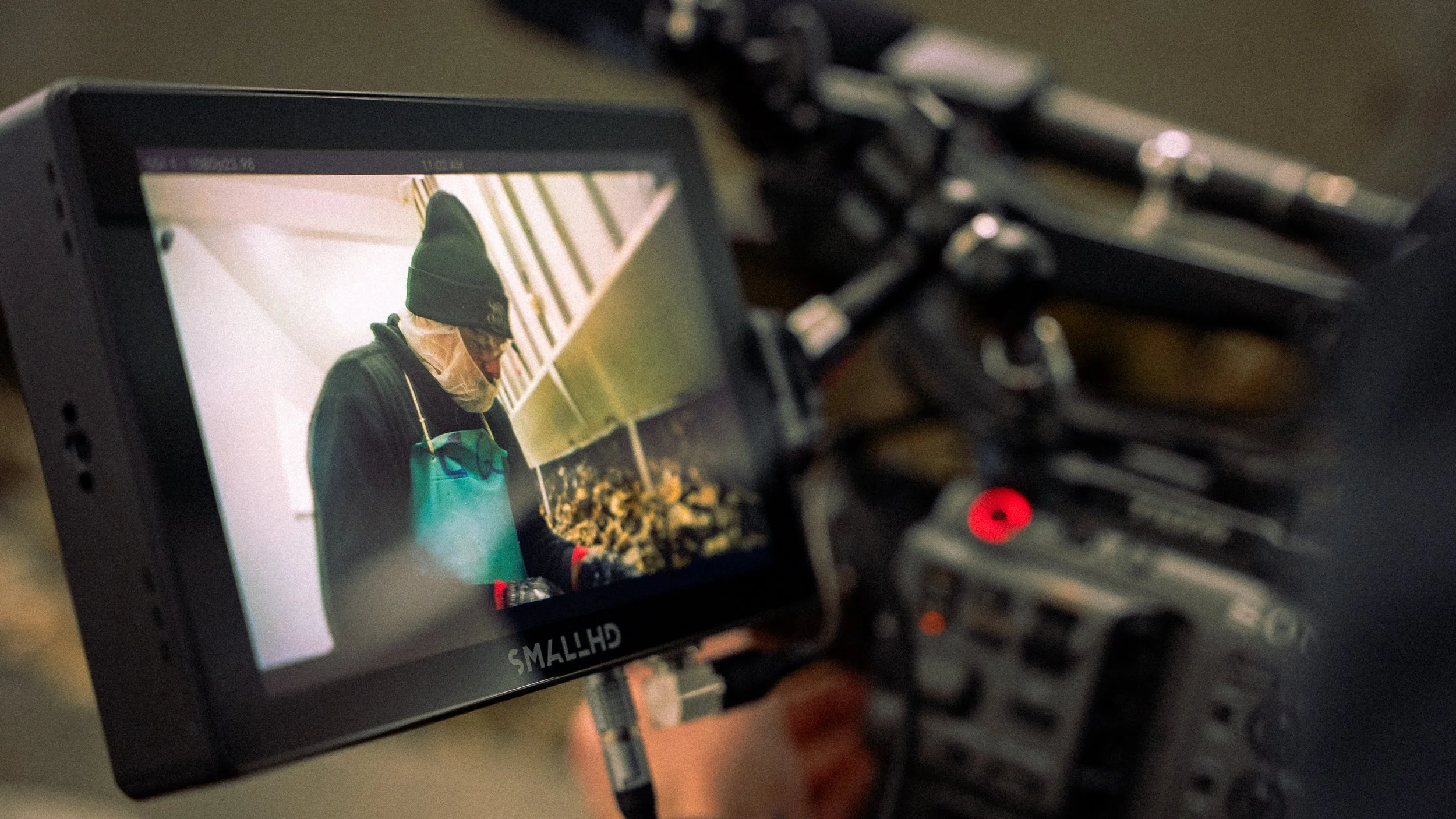
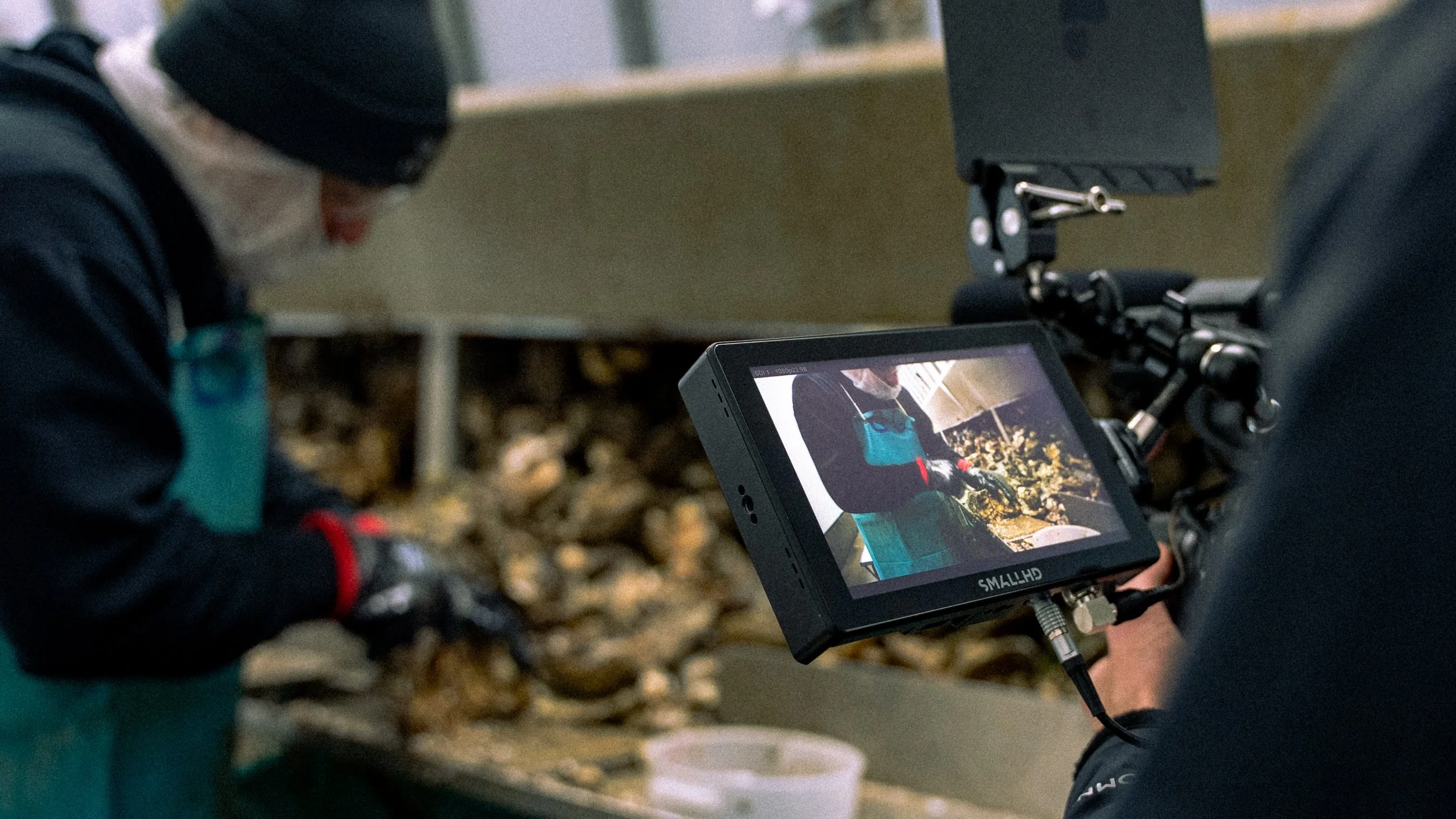
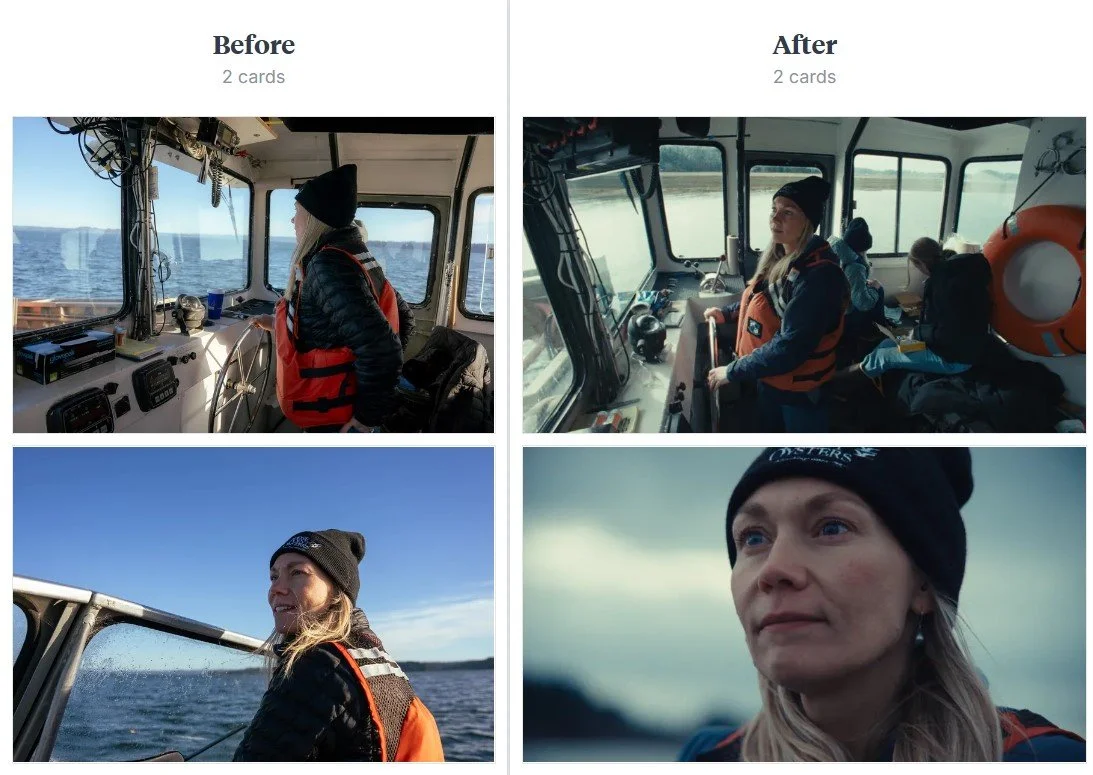
This was a two-person crew. Shooting in tight spaces, especially on a small fishing boat, came with challenges.
At the same time, small crews create intimacy. It becomes just you and the subject, which allows for more honest moments. That is what audiences connect with.
The Pacific Northwest brought rain, wind, and cold conditions. Without preparation, it would be easy to feel overwhelmed.
A clear schedule, shot list, and creative direction made everything manageable. When conditions became difficult, we did not have to guess what to do next. That structure allowed us to stay focused and calm.
Ending
This project pushed us in new ways. We had never filmed on a boat before, and the conditions were demanding.
The final piece reflects the strength of our process. Careful pre-production, strong communication with non-fiction talent, and years of refining our system all played a role.
We learned a great deal from this experience, and it stands as a highlight in our work at Honeybee Films.